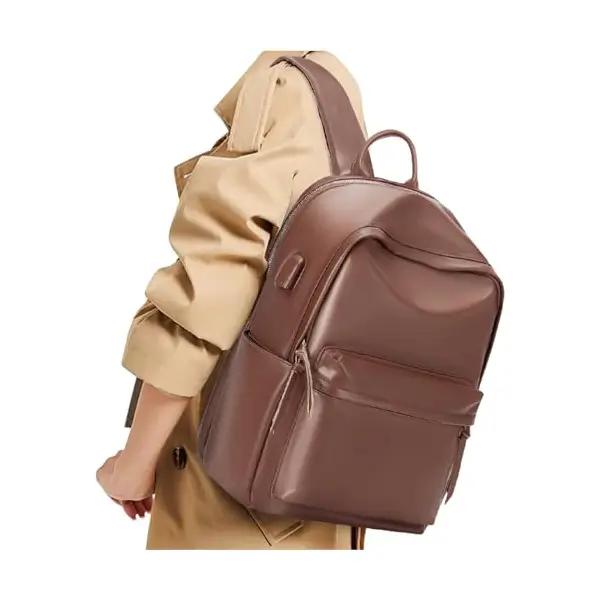
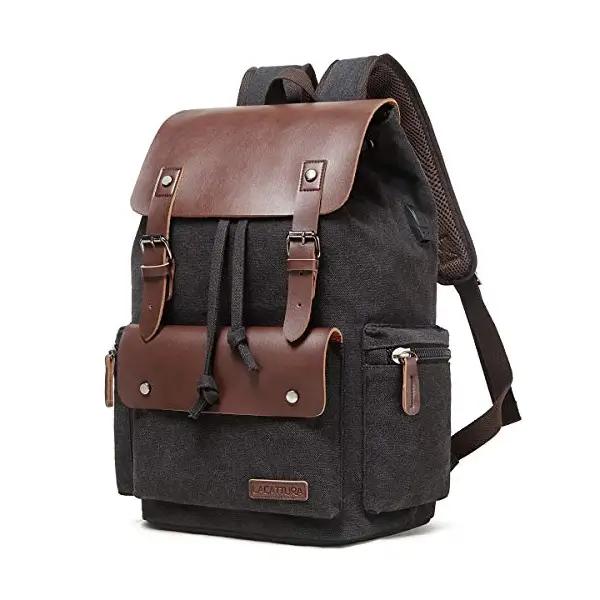
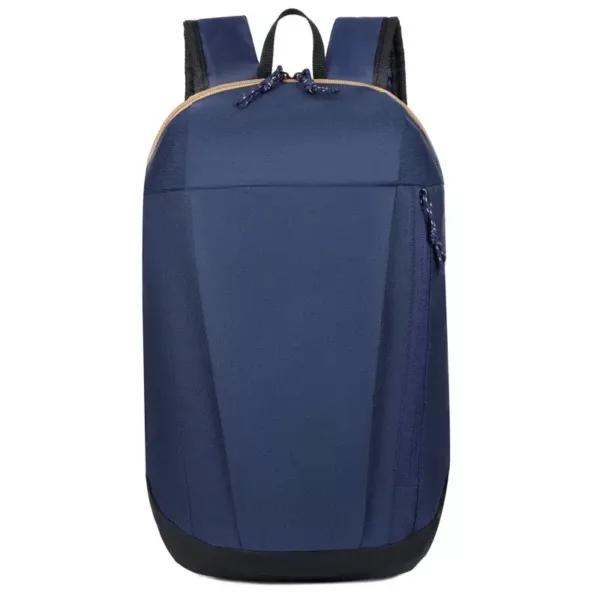
Choosing a leather backpack manufacturer means deciding early what the bag is actually made from. Most buyers say leather, but they mean very different things. Full-grain leather, top-grain leather, split leather, PU-coated synthetic, waxed canvas, and even cotton duck with leather trim all get called leather backpacks. The distinction matters because it changes price, tooling, lead time, and what you can honestly claim on your product page.
The industry reference distinguishes leather from synthetic leather clearly. Leather is a natural material with grades and finishes. Synthetic leather is a coated composite, usually polyurethane or polyvinyl chloride on a textile backing. Both have a place. Neither is universally better. A buyer who wants a $28 retail backpack is not buying full-grain leather from a leather backpack manufacturer. A buyer who wants a $280 retail bag will not accept a PU-coated polyester shell. You specify the material first, then everything else follows.
| Material | What it's good for | Where it fails |
|---|
| Full-grain leather | Premium look, natural patina, durability over years, strongest hand feel | High cost, long lead time, color variation, heavy, water sensitivity |
| Top-grain leather | More uniform surface, easier color matching, lower cost than full-grain | Less character, finish can wear unevenly, still requires careful cutting |
| Split leather | Lowest cost genuine leather, large panels, accepts coatings well | Weak tear strength, needs backing, poor abrasion resistance |
| Synthetic leather (PU/PVC) | Consistent color, wide design freedom, low cost, animal-free claim | Peels over time, lower perceived value, can crack in cold, not a leather claim |
| Cotton duck or canvas with leather trim | Lighter weight, lower cost, rugged casual look, easier to print | Not a leather backpack in most buyer minds, trim fails before body |
| Waxed cotton | Water shedding, soft hand feel, patina like leather, repairable | Wax marks clothing, needs re-waxing, creases easily, maintenance burden |
Construction choices layer on top of material. A leather backpack manufacturer can build with a frame sheet for structure or keep the bag frameless for softness. The reference lists frame sheets as semi-rigid back-panel inserts that limit collapse and spread pressure. Internal stays add vertical load transfer. Semi-structured bodies use foam, board, or piping. For a leather backpack under 18 liters, frameless or semi-structured is common. For a 30-liter travel bag, a frame sheet and load lifters matter. The carrying system is not an afterthought. Shoulder strap foam, spacer mesh on the back panel, a sternum strap, and a hip belt all change how the bag wears. A buyer who skips the carrying-system spec gets a beautiful bag that hurts after two hours.
Hardware is where leather backpacks fail first. Buckles, D-rings, zipper pulls, and strap anchors take repeated peak loads. The reference says to reinforce strap anchors, grab handles, and base seams. For leather, that means bar-tacked webbing anchors, riveted stress points, and edge-painted or folded leather edges. Cheap hardware on a leather backpack is worse than cheap hardware on a nylon bag because the leather itself adds weight and pull force. Specify hardware finish, size, and attachment method in the bill of materials.
How to Specify a Leather Backpack for Different Buyer Situations
Say you're launching a fashion brand and your customer cares about look first. You want a personalized leather backpack with monogramming or embossing. The specification decisions that change your outcome are leather temper, colorfastness, and edge treatment. Temper is how soft or firm the leather feels. A soft temper drapes nicely but scuffs easily. A firm temper holds shape but feels stiff. Colorfastness matters because a red leather backpack that rubs off on a white shirt is a return. The reference defines colorfastness as resistance to color change or transfer during rubbing, washing, light exposure, or moisture contact. Specify the test method and acceptance limit. Edge treatment is the painted, folded, or raw edge on straps and flaps. Raw edges look unfinished. Painted edges chip. Folded edges cost more but last.
Now say you're a corporate gifting buyer. You need 800 personalized leather backpacks with a company logo. Your spec decisions are different. You care about logo durability, dimensional consistency, and packaging. A debossed logo is cheaper than a metal plate but less visible on dark leather. A metal plate adds tooling cost and lead time but reads premium. Dimensional consistency matters because corporate recipients compare bags side by side. Leather is a natural material with variation. You need to specify acceptable thickness tolerance, color range, and grain variation. The reference says thickness is measured under stated pressure and matters for fit, folding, sewing, and thermal performance. For leather, a 1.2 mm hide cuts and sews differently than a 1.8 mm hide. Specify the tolerance.
A third buyer situation is the outdoor or travel brand. You want a leather backpack that can handle weather and load. Your spec decisions center on coatings, lamination, and load transfer. Leather itself is not waterproof. A waxed or oiled finish helps water shedding but changes hand feel and marks clothing. A waterproof lining inside the bag protects contents even when the leather gets wet. The reference lists polyurethane coating, polyvinyl chloride coating, and thermoplastic polyurethane film as barrier options. A TPU-laminated liner inside a leather backpack gives you a waterproof main compartment without changing the exterior look. Load transfer matters more here. A hip belt and frame sheet together move weight off the shoulders. The reference says to use the hip belt and frame structure together when the product is intended to transfer load away from the shoulders. Specify both or neither. A hip belt without a frame sheet just squeezes the waist.
Say you're a reseller importing for a mid-market retail chain. You need a leather backpack manufacturer who can hit a price point and repeat it. Your spec decisions are about material yield, cutting patterns, and hardware standardization. Split leather or synthetic leather keeps cost down. A cutting pattern that nests panels efficiently reduces waste. Standardized hardware across multiple SKUs lowers per-unit cost and simplifies reorders. You also need to specify stitch density. The reference includes stitch density in the specification checklist. Too few stitches per inch and seams open under load. Too many and the leather perforates and tears. There's a sweet spot. Your leather backpack manufacturer should know it. You should still write it down.
Some customization costs nothing. Some costs thousands. Knowing the difference is the whole game when you compare suppliers. A personalized leather backpack with a debossed logo uses a brass stamp. That stamp is tooling. It costs money, takes days to make, and wears out after a few thousand impressions. A screen-printed logo on a leather panel uses a screen. Also tooling, but cheaper. A woven label sewn inside the bag is not tooling. It's a purchased component with a setup fee. A hang tag is not tooling. A custom metal zipper pull is tooling. A custom leather pull tab is not, if it's cut from the same hide.
Custom colors change lead time more than cost, unless you're buying small quantities. A leather backpack manufacturer can dye to a Pantone reference, but minimums apply. Dye lots vary. If you need exact color matching across multiple production runs, specify a color range and keep a reference swatch. The reference says the specification checklist should include approved color references. For leather, that means a physical swatch, not a digital file. Digital color on a screen does not match dyed leather.
Pattern changes are the most expensive customization. A new pocket, a different flap shape, a wider strap, a changed laptop sleeve. These are pattern revisions. The reference lists panel maps, pattern revisions, seam types, and seam allowances as part of the specification. A pattern change means new cutting dies, new sewing instructions, and often new hardware placement. Lead time goes up. Cost goes up. The tooling may be reusable for future orders, but you pay for it now. Ask your leather backpack manufacturer which changes are pattern-level and which are surface-level. Surface-level changes are print, emboss, label, zipper pull, lining color. Pattern-level changes are anything that alters panel shape, seam position, or component size.
Lining changes are a middle case. A different lining fabric usually doesn't need new tooling, but it may change sewing setup if the material thickness or stiffness differs. A thin polyester lining sews fast. A thick fleece lining slows the line. A waterproof TPU lining needs different seam sealing. Specify lining material, thickness, and color in the bill of materials. Don't assume the factory will choose well.
Hardware changes are often underestimated. A magnetic snap instead of a zipper changes the closure, the flap pattern, and the sewing sequence. A different buckle size changes strap width. A metal plate instead of a debossed logo changes the front panel construction. Hardware is not a cosmetic choice. It's structural. The reference says the bill of materials should include hardware sizes, finishes, and color references. Write it all down.
What to Check Before Approving Production
Before you approve a pre-production sample, check the things that cause returns and chargebacks. Start with colorfastness. Rub the leather with a white cloth. If color transfers, that's a fail. The reference defines colorfastness as resistance to color change or transfer during rubbing, washing, light exposure, or moisture contact. Specify the test method. Crocking is the rubbing test. Lightfastness is the exposure test. Both matter for a leather backpack.
Check stitch density and seam integrity. Pull on the strap anchors. Open and close the zippers twenty times. Load the bag with the intended weight and carry it. The reference says to reinforce strap anchors, grab handles, and base seams because these zones receive repeated peak loads. A leather backpack with weak anchors fails at the top corners first. Look for bar tacks, rivets, or folded leather reinforcement at every attachment point.
Check the leather itself. Thickness and temper vary within a hide. A panel cut from the belly is looser and stretches more than a panel cut from the shoulder. A leather backpack manufacturer should cut from the correct part of the hide for each panel. If the bag sags on one side, that's a cutting problem. If the color is uneven, that's a finishing problem. If the edge paint cracks when you fold the flap, that's an edge treatment problem.
Check claim control. If you plan to write "waterproof" on your product page, you need a test report that supports it. A waxed leather backpack is water-resistant, not waterproof. A TPU-lined bag with welded seams may be waterproof, but only if the seams are actually welded and tested. The reference includes performance test methods, conditioning, sample size, acceptance limits, and report format in the specification checklist. Specify the test before production. Don't wait until the goods arrive and then wonder if you can say "waterproof."
Check the dimensional spec. The reference defines height, width, depth, and capacity with stated measurement points and tolerances. A leather backpack that measures 2 cm off spec may not fit the intended laptop or the retail shelf. Measure the pre-production sample against the dimension diagram. Check the opening length. A zipper that's too short makes the bag hard to pack. A handle drop that's too short makes it hard to carry. These are small measurements with big consequences.
Finally, check the packing method. Leather backpacks scratch in transit. The reference includes packing method, shape-control inserts, polybag requirements, and carton quantity in the specification checklist. Specify a dust bag or polybag for each unit. Shape-control inserts keep the bag from collapsing. Carton quantity affects freight cost. A leather backpack manufacturer who ships 20 bags loose in a carton is saving money and costing you returns.
For more on carrying systems and strap design, see our backpack straps guide. If you're weighing leather against other materials, our rPET backpacks page covers recycled options. For size and capacity decisions, the backpack size and capacity guide walks through the measurements. And if you're comparing suppliers across China, our top backpack manufacturers post gives a broader view.