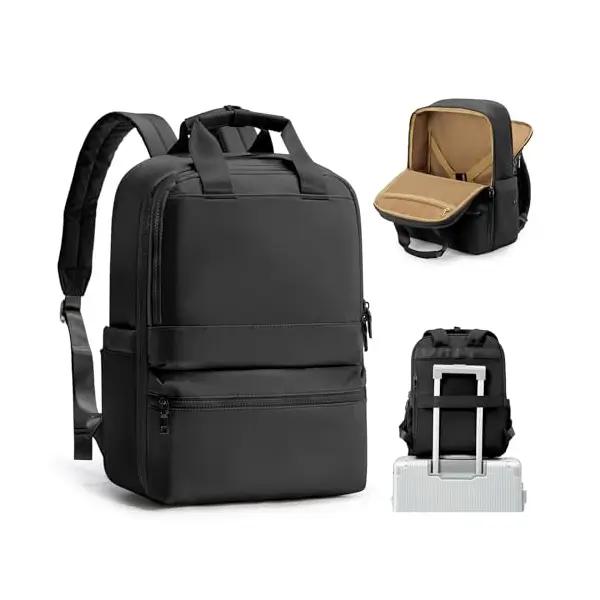
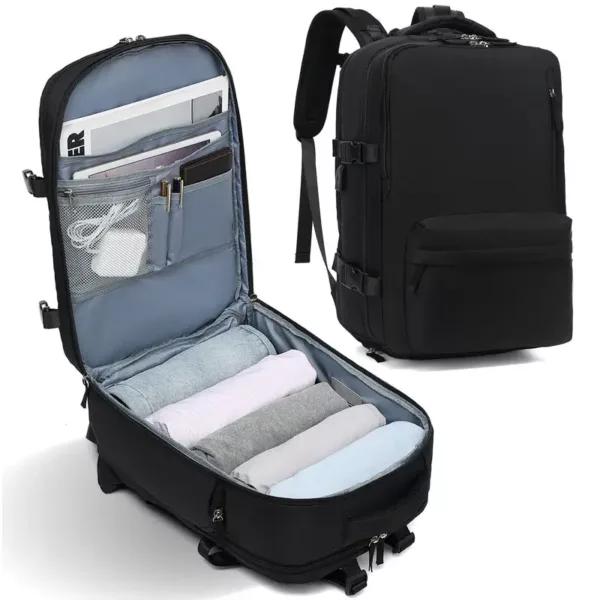
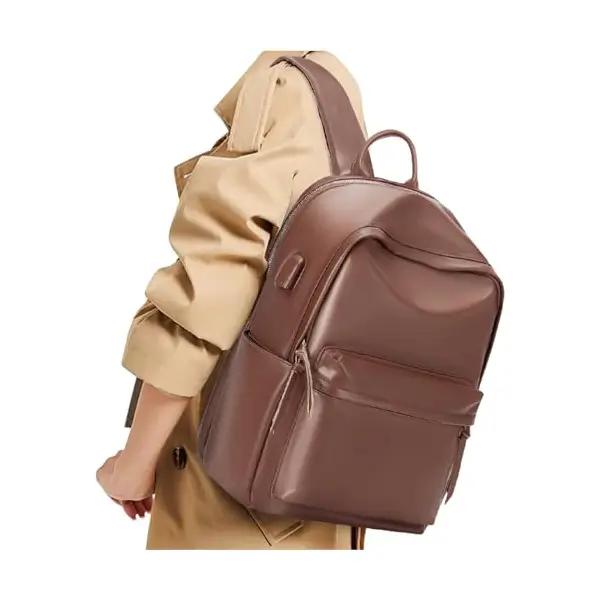
As a travel backpack manufacturer, we see the same question on nearly every brief. Which shell fabric should carry the load? The answer changes with the trip, the target price, and what the buyer promises on the landing page. A carry-on for weekend city breaks does not need what a 45-liter trekking pack needs. So we start with the material, not the silhouette.
Polyester is the default for most custom travel packs. It holds color well, resists shrinking, and comes in a huge range of recycled-content options. Nylon costs more but earns it back in abrasion resistance and strength-to-weight. Canvas gives structure and a certain look. Ripstop adds a grid that stops small tears from running. Each choice changes the hand feel, the packed weight, and how the bag photographs. Say a buyer wants a compression travel backpack for a Kickstarter. They'll likely choose ripstop nylon because it reads as technical and survives warehouse handling. A buyer doing a boutique line might pick cotton duck canvas and accept the weight for the texture. Both are right, for different customers.
Then there's the coating. A polyurethane coating improves water resistance and can soften the face fabric. PVC coating is stiffer and tougher. TPU film lamination gives a more flexible waterproof barrier. Waxed cotton sheds water but marks and creases, and the buyer needs to tell the end user that. These decisions affect seam construction later. A welded seam only works with compatible coated or laminated fabrics. A sewn seam with binding works across more materials but leaves needle holes that need taping if the bag must hold back real rain.
| Material | Good for | Where it fails |
|---|
| Polyester fabric | Print quality, price, recycled options, color range | Lower abrasion resistance than nylon in heavy use |
| Nylon fabric | Strength-to-weight, packability, technical look | Higher cost, more stretch under load unless stabilized |
| Canvas / cotton duck | Structure, texture, premium casual aesthetic | Heavier, slower to dry, needs moisture control |
| Ripstop fabric | Tear resistance, lightweight shells, travel compression packs | Grid pattern may not suit every brand look |
| TPU laminated fabric | Waterproof seams, wipe-clean surfaces, welded construction | Cost, stiffness, limited breathability |
Foam and board matter too. Closed-cell foam gives structure without soaking up water. A plastic board in the back panel stops a loaded pack from collapsing into the wearer's spine. Spacer mesh adds airflow but pushes the load slightly farther from the body. That's a real tradeoff. More ventilation can mean more sway. The brief should state which one wins.
How to specify a travel backpack for your buyer
Buyers come to us with different problems. The spec that solves one can waste money for another. Here are three situations we see repeatedly.
The airline carry-on seller. This buyer needs the bag to fit overhead bins. So the first number on the spec sheet is the finished dimension, not the capacity claim. A bag listed as 40 liters that measures 56 cm tall fails the gate test. We work from the size guide, set the height, width, and depth with tolerances, then build the pattern to hit those numbers. Compression straps help here. A travel backpack with compression lets the user reduce depth after packing, which helps when the bin is tight. The buyer should also specify a luggage pass-through panel on the back. It costs little but changes how the bag is used in airports.
The outdoor brand doing a multi-day trekking pack. This buyer cares about load transfer. They need a frame sheet or internal stays, a padded hip belt, and load lifters. Those components change the pattern, the tooling for the foam, and the sewing time. The shoulder strap anchors need reinforcement patches. The base seam takes repeated drops. We ask about the maximum recommended load because that drives the webbing width and the buckle rating. A 12 kg pack can use lighter hardware. A 22 kg pack cannot. The spec should also name the torso length range. One size does not fit every body, and the brand's return rate will show it if they pretend it does.
The corporate gifting or promotional buyer. This buyer wants a travel backpack that looks good at a trade show and survives one or two trips. They often over-spec. They ask for YKK zippers, 600D polyester, and a laptop sleeve, then order 300 pieces. That's fine, but the MOQ for special fabric may be higher than the order. We steer them toward a semi-structured body with a simple front pocket and a padded laptop compartment. The customization is the logo, not the engineering. This keeps the unit price down and the lead time short. The bag still carries a laptop and a jacket. It just doesn't pretend to be expedition gear.
Backpack sizes for travel split roughly into three groups. Under 20 liters works for day use and underseat carry. Twenty to 35 liters covers most weekend trips. Over 35 liters needs a real suspension system. The size claim on the website should match the measured capacity, not the marketing wish. We've seen brands list a 28-liter bag because that number sounds good, then the pattern measures 22. The customer notices. The return follows.
Some customization is free. Some changes everything. Knowing the difference saves a buyer weeks and a lot of money.
Logo placement rarely changes tooling. A woven label, a heat-transfer print, or an embroidered patch on the front panel uses existing machinery. The cost is per piece, not a setup fee. Changing thread color, zipper tape color, or lining fabric is also low impact. These are spec changes, not structural changes.
New shapes are different. If the buyer changes the depth of the pack by 3 cm, we redraw the pattern. That affects the gusset, the lining, the foam, and the cutting die. A new back panel shape means a new mold for the foam if the panel is molded. A custom buckle or a branded zipper pull requires a new injection mold. That's tooling cost and weeks of lead time. A custom frame sheet needs a die. These are the changes that push a 20-day production run to 30 or 40 days.
Waterproof construction is another cost step. A standard bag with a PU coating and sewn seams is one thing. A roll-top bag with welded seams and waterproof zippers is another. The welding machine setup, the seam tape, and the testing all add cost. The buyer needs to know whether the bag must survive a drizzle or a full submersion. The answer changes the entire construction method.
Compression systems sit in the middle. A simple compression strap across the front adds webbing and a buckle. That's a small cost. A full compression travel backpack with a zippered compression gusset is a different pattern entirely. The gusset folds, the zipper runs around the body, and the sewing sequence changes. It's not a strap. It's a structural feature. Buyers should ask for a sample before committing to that design. The sample shows how the bag behaves when the compression zipper closes. It also shows whether the main compartment still opens easily when the cube is compressed.
For buyers comparing suppliers, the honest conversation is about where the money goes. A bag with a custom frame sheet, welded seams, and a compression gusset costs more than a simple carry-on. That's not markup. It's labor, tooling, and test time. If a quote comes back suspiciously low, one of those features is probably missing.
What to check before you approve production
Approving a pre-production sample is not a formality. It's the last chance to catch what the spec sheet missed. We tell buyers to check five things.
First, measure the finished dimensions. Use the same reference points as the spec diagram. A bag that is 2 cm taller than the drawing may fail the airline sizer. Check the opening length of the main zipper. A zipper that is too short makes packing miserable. Check the shoulder strap length range. If the strap cannot adjust long enough for a winter jacket, the bag fits nobody in February.
Second, load the bag. Put the intended weight inside, not an empty sample. A travel backpack with compression behaves differently when full. The compression zipper should close without forcing the teeth. The seams at the strap anchors should not pucker. The frame sheet should hold its shape. If the bag collapses or sags, the foam or board spec is wrong.
Third, check the coating and the seams. Rub the fabric. Does the coating flake? Fold a seam. Does the tape lift? If the bag claims water resistance, the test method matters. The spec should state the hydrostatic head, the seam taping, and the zipper type. A claim of "waterproof" without a test method is a claim waiting to fail. We fix the wording in the spec so the buyer's website says what the bag actually does. That protects both sides.
Fourth, inspect the hardware. Zipper sliders should run without catching. Buckles should engage with a click. The webbing should not slip through the ladder lock under load. These are small parts. They fail first.
Fifth, check the color and the logo. Pantone matching has a tolerance. The spec should state it. The logo placement should match the artwork coordinates. A logo that drifts 5 mm on a small front panel looks wrong in photos. Buyers should photograph the sample from the same angle as their product page. What looks fine in hand can look off on a screen.
The pre-production sample is the contract. If the buyer signs off on it, production follows that sample. So the time to argue about a seam or a zipper is before the signature, not after the container leaves the port. We also recommend a capacity and size check against the stated liters, and a look at our strap construction guide if the pack carries real weight. For brands exploring recycled materials, our rPET backpack range shows what's possible without new tooling.