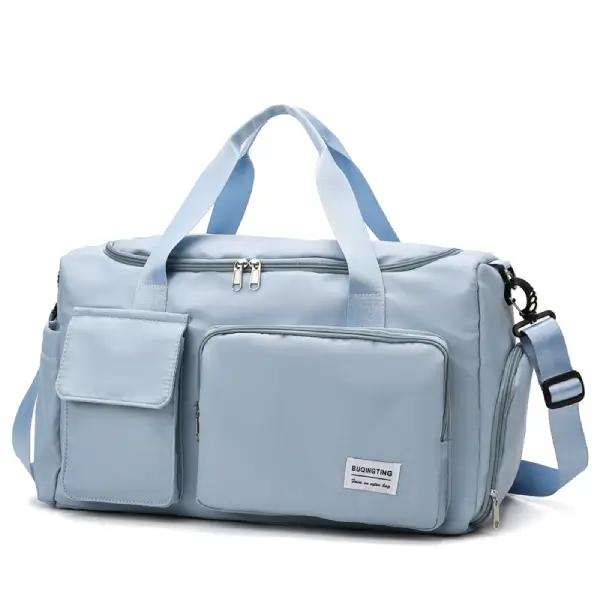
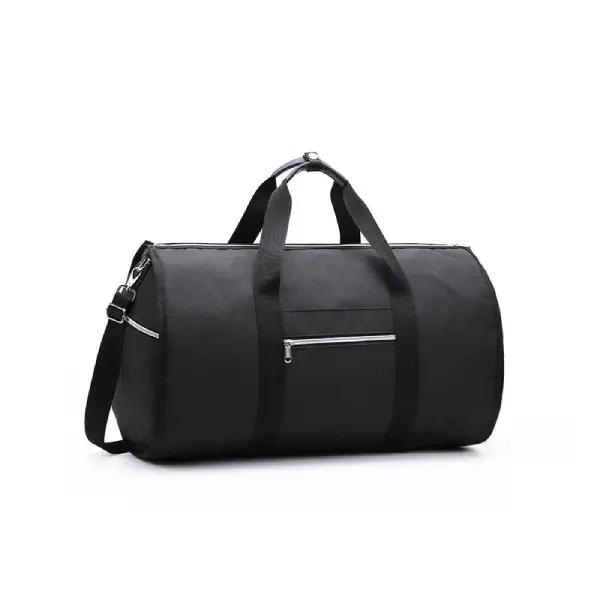
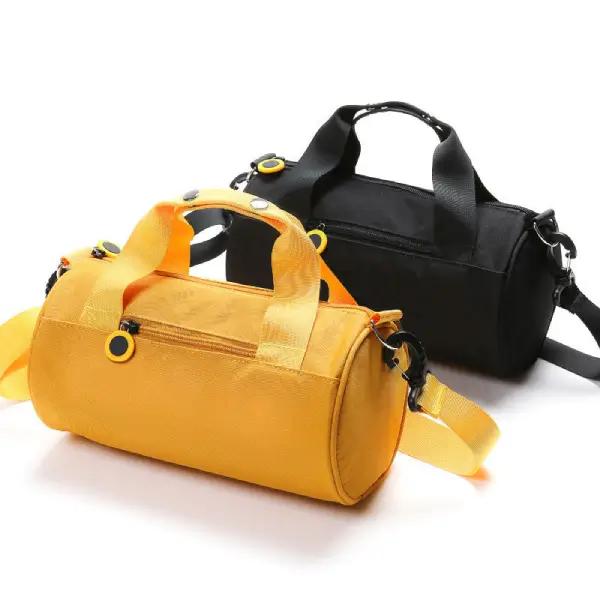
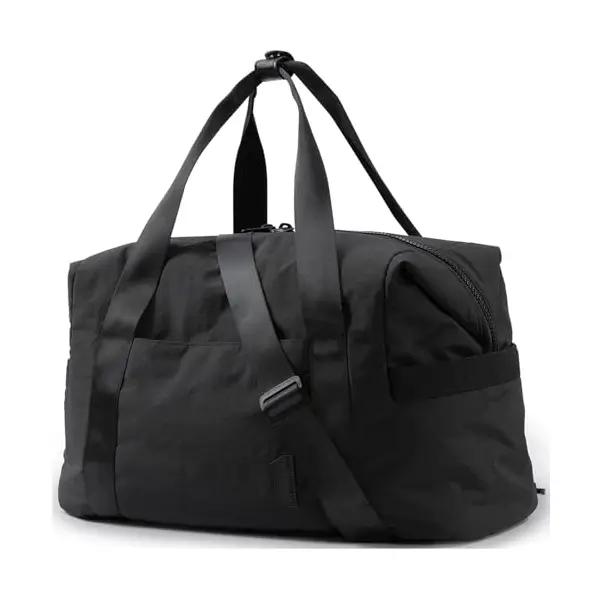
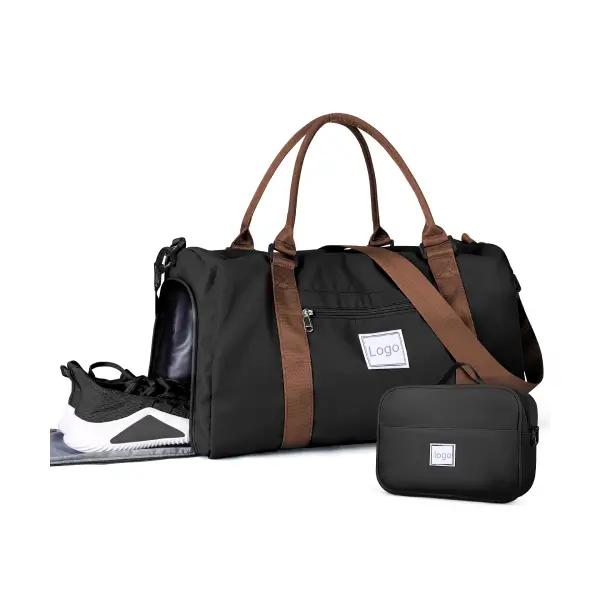
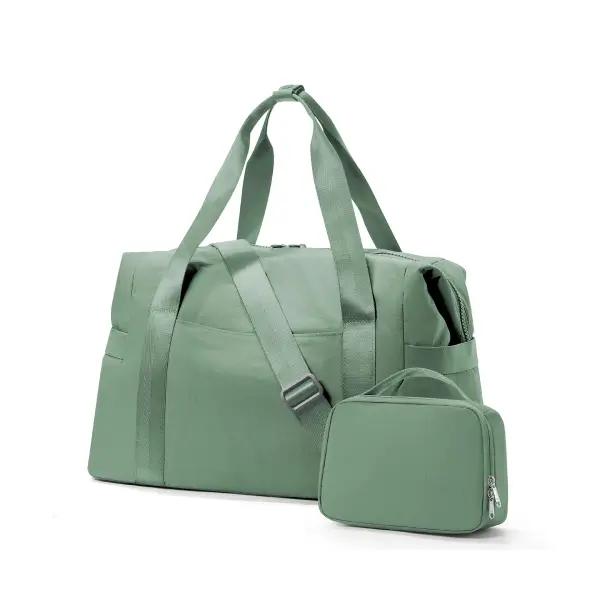
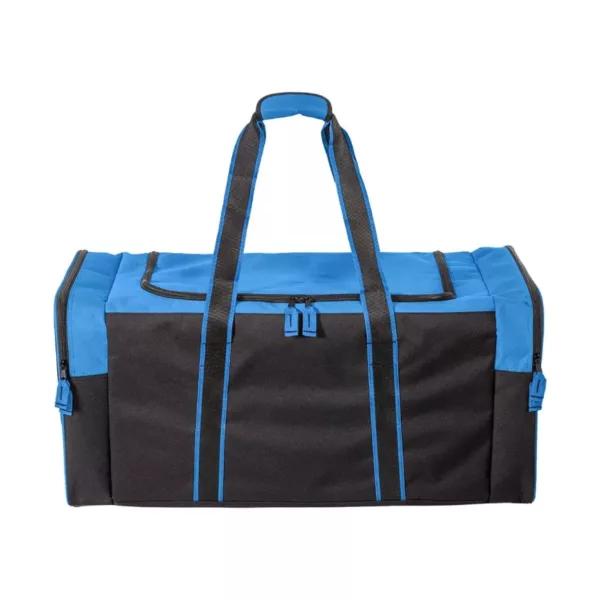
A childrens duffle bag is not a scaled-down adult duffle. The loads are lighter. The abuse is different. A kid will drag it across a gym floor, stuff it into a cubby, and leave it in a pile by the front door. That changes which materials make sense. A fabric that works on a travel duffle for adults can fail fast on a child's bag because the failure mode is not weight. It is abrasion, snagging, and zipper damage from overstuffing.
Say a buyer is sourcing for a school sports program. The bag needs to survive being kicked down a hallway. The shell has to resist scuffing. The zipper has to tolerate a child yanking it closed over a wet towel and a pair of cleats. That buyer should not start with the lightest polyester. They should start with a coated fabric that has enough surface toughness to shrug off rough floors. A polyurethane coating helps. It also changes the hand feel, which matters if the bag is meant to feel soft against a small body.
Nylon is another option. It has high strength-to-weight performance and good abrasion resistance. A nylon childrens duffle bag can be lighter than a polyester one with similar toughness. But nylon costs more. And the coating choice matters more with nylon because the base fabric itself offers less water resistance without help. A buyer who wants a bag that can sit on wet grass during a Saturday match should ask about the coating, not just the fiber.
Canvas shows up often in this category because it reads as durable and classic. Cotton duck is a tightly woven canvas with a smooth, firm face. It scuffs, but it scuffs in a way that some brands like. It looks better after a season of use, not worse. The tradeoff is weight and drying time. A canvas childrens duffle bag that gets soaked at a swim meet will stay wet for hours. That is a real problem if the bag goes into a locker and comes out the next morning.
The table below compares the realistic choices. It is not about which material is best. It is about which material matches the life the bag will actually live.
| Material | Good for | Where it fails |
|---|
| Polyester fabric with PU coating | Cost control, printability, scuff resistance on gym floors | Can feel stiff; coating weight must be checked or water resistance drops |
| Nylon fabric with coating | Light weight, high abrasion resistance, soft hand feel | Higher cost; uncoated nylon wets through fast |
| Canvas or cotton duck | Aged look, structure, texture, brand appeal | Heavy; slow drying; can stain and hold moisture |
| Ripstop polyester or nylon | Tear resistance at stress points, good for overstuffed bags | Grid texture may not suit all print designs; cost varies |
| Mesh panels | Ventilation for wet gear, visibility, stretch pockets | Not a full shell; snags on rough surfaces; limited structure |
Reinforcement matters as much as the face fabric. The industry reference is clear about this. Strap anchors, grab handles, and base seams receive repeated peak loads. On a child's duffle, the grab handle is yanked. The shoulder strap anchor gets pulled when the bag is swung. A reinforcement patch at these points adds a layer without changing the whole shell. Buyers who skip this save pennies and buy returns.
How Different Buyers Should Specify This Product
Three buyer situations change the spec in different ways. A buyer who ignores their own situation ends up with a bag that is right for someone else's customer.
First, a buyer sourcing for a school or youth sports league. Volume is high. The budget is tight. The bag must survive one season, maybe two. This buyer should specify a coated polyester shell, a simple U-shaped zipper opening, and a reinforced base panel. The base is where the bag gets dragged. A double layer of fabric or a plastic board insert keeps the bottom from wearing through. The buyer should also ask about the zipper size. A larger zipper with bigger teeth survives a child's yanking better than a fine coil zipper. The tradeoff is a slightly stiffer opening. That is acceptable for this buyer.
Second, a buyer developing a premium kids' brand. This buyer sells to parents who care about how the bag looks in photos and how it ages. The spec changes. A canvas or cotton duck shell with leather or synthetic leather trim reads as premium. The bag will be heavier. That is part of the story. The buyer should specify the temper of any leather trim and check colorfastness. A synthetic leather that cracks after one winter looks worse than no leather at all. This buyer should also think about the lining. A cleanable liner matters because kids put wet things in bags. A polyethylene vinyl acetate film liner wipes clean. That is a selling point parents notice.
Third, a buyer sourcing for a travel or overnight camp program. The bag gets packed full, thrown into a van, and unpacked by a tired child at night. This buyer needs a bag that opens wide and closes without fighting. The spec should call for an opening length that lets a small hand reach the bottom corner. The zipper should run far down the sides, not just across the top. Compression straps help here too. They reduce pack volume and limit load shift when the bag is only half full. A frameless construction is fine. The bag does not need a frame sheet. But the base should have some structure so the bag does not collapse into a puddle when set down.
Each of these buyers is buying a childrens duffle bag. But the bill of materials looks different. The school buyer optimizes for abuse. The brand buyer optimizes for appearance and aging. The camp buyer optimizes for access and packability. A factory that asks which of these you are is a factory that has made this product before.
Some customization is free. Some is not. Buyers save money when they know the difference before they ask for a quote.
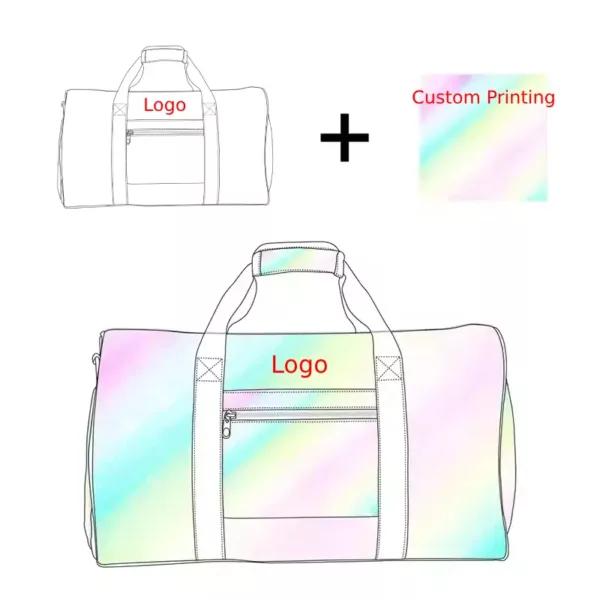
Printing a logo on the side panel does not change tooling. It changes the process. Screen printing or heat transfer on a flat panel is straightforward. The cost is per unit, not per design. Changing the fabric color from a standard swatch also does not change tooling, as long as the mill has the color in stock. A Pantone match that requires a custom dye lot will add time and a minimum order quantity. That is a cost driver buyers often miss.
Changing the zipper length or the opening shape does not change tooling either. The pattern is adjusted. The sewing line changes. But no new mold or die is cut. This is a soft change. It affects labor and maybe material yield, but not the hard tooling budget.
What actually changes tooling? A custom zipper pull with a molded shape. A plastic bottom foot or corner guard that needs an injection mold. A custom buckle or D-ring. These are hard parts. They require a mold, a die, or a new hardware supplier. The tooling cost is paid once. It is amortized across the order. A buyer ordering 500 pieces will feel that tooling cost per unit. A buyer ordering 5,000 pieces will not.
Custom woven labels are somewhere in the middle. A woven label with a new design requires loom setup. The cost is modest. The lead time is real. A buyer who needs labels fast should ask about stock label shapes with printed information instead of fully custom woven artwork. That can cut weeks off the schedule.
Embroidery changes the production line but not the tooling. It adds stitch time per unit. A dense logo with many thread changes costs more than a simple one-color mark. The bag itself does not change. Buyers who want embroidery should ask about stitch count, not just logo size. A high stitch count on a thick canvas shell can also cause puckering. That is a quality issue, not a cost issue.
The honest summary is this. Soft changes like color, print, zipper length, and pocket placement are negotiable and fast. Hard changes like custom hardware, molded parts, and new label weaves are not. They add tooling cost and lead time. A buyer who separates these two lists before the first call will get a more accurate quote.
What to Check Before Approving Production
Before a buyer approves a pre-production sample, there are checks that catch the expensive mistakes. These are not optional. They are the difference between a bag that ships and a bag that comes back.
First, check the dimension diagram against the actual sample. The reference guide lists height, width, depth, and opening length as standard measurements. A childrens duffle bag that measures 2 cm shorter than the spec will hold less than the buyer promised. A bag that measures 2 cm longer will cost more to ship and may not fit the retail shelf. The buyer should measure the sample themselves, not rely on the factory's report. Use the same reference points the factory uses. Ask for those points in writing.
Second, check the zipper. Open and close it twenty times. Then do it with the bag full of bulky items. The zipper should not catch on the fabric. The slider should not stick at the corners. A child will not be gentle. If the zipper fails on the sample, it will fail in the field. Ask the factory to confirm the zipper size and the seam allowance around the zipper tape. A tight seam allowance causes the fabric to bunch into the zipper teeth. That is a construction error, not a zipper defect.
Third, check the strap anchors and grab handle. Pull on them hard. The reference is explicit that these zones receive repeated peak loads. A grab handle that is sewn only through the top panel will tear out. It needs to be anchored to a reinforcement patch or a structural seam. The buyer should ask how the anchor is constructed, not just whether it looks strong. A box-X stitch over a patch is a good sign. A single line of stitching through one layer of fabric is a red flag.
Fourth, check performance claims. If the bag is described as water-resistant, ask what that means. The spec should state the coating type and the coating weight. If the bag is described as tear-resistant, ask whether the fabric is ripstop or whether a reinforcement patch is used. Words like durable and strong mean nothing without a test method. The buyer should ask for the test report or the acceptance limit. If the factory cannot provide one, the claim is marketing, not engineering.
Fifth, check the color. Colorfastness matters for a childrens duffle bag because it rubs against clothes, car seats, and other bags. A fabric that bleeds color onto a white school uniform is a return. The buyer should ask for a colorfastness test result. If the bag has multiple colors, check the lightest color against the darkest. Dye transfer happens where they meet.
Finally, check the packing method. A duffle bag that ships flat with sharp folds will arrive creased. A bag that ships stuffed with paper will arrive full but costs more to ship. The buyer should specify the packing method before production. The reference guide lists shape-control inserts and polybag requirements as standard spec items. A buyer who skips this step gets a bag that looks great in the sample photo and tired on the retail shelf.
These checks take an afternoon. They save a production run. A buyer who does them once will never skip them again. For more on how strap systems behave under load, see our backpack straps guide. If you are comparing materials across categories, the rPET backpacks page shows how recycled content changes the conversation. And if you want to see how a specific product applies these principles, look at the BB-2737 backpack.