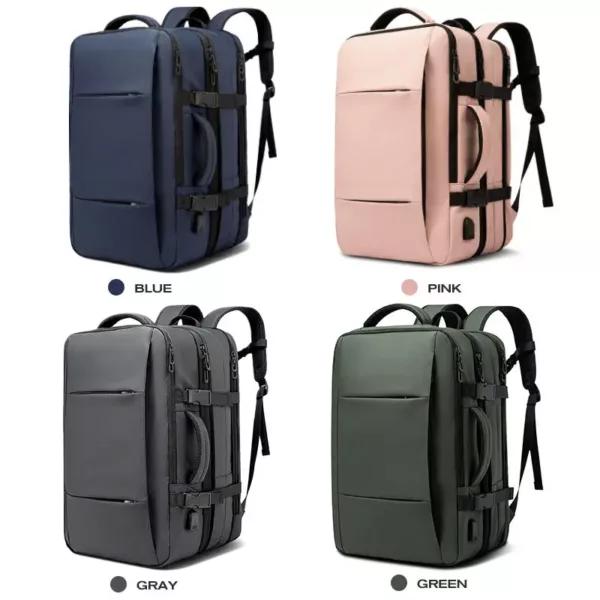
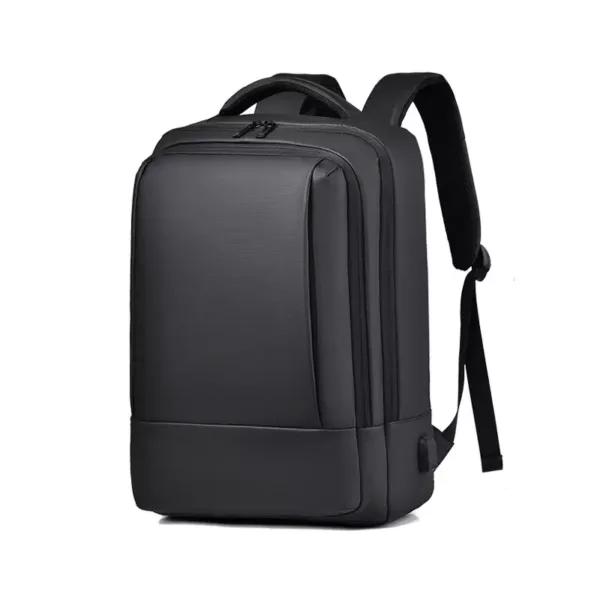
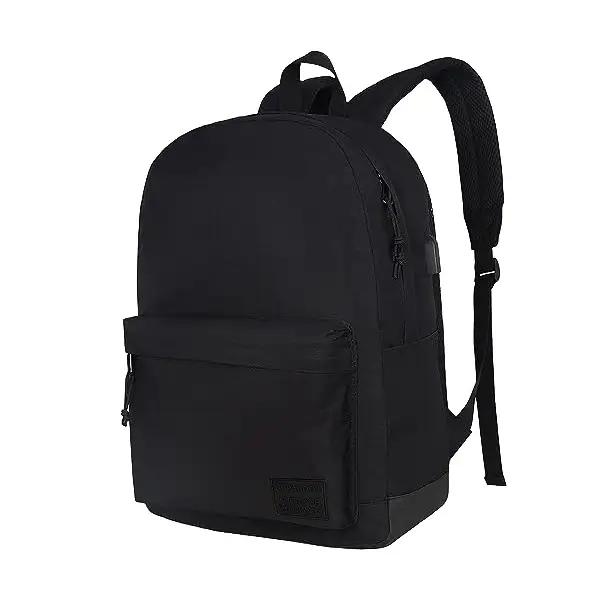
A laptop backpack manufacturer rarely starts with a single fabric. Buyers choose a shell material, a lining, a padding system, and a coating or lamination. Each choice changes how the bag feels, how long it lasts, and what it costs to ship. The reference for this category is the INDUSTRY REFERENCE on materials for bag construction. It lists the realistic options and what they do under load.
Polyester fabric is the workhorse. It is dimensionally stable, easy to print, and available in recycled-content versions. Nylon fabric gives higher strength-to-weight performance and better abrasion resistance. Canvas reads as premium and structured but adds weight and cost. Ripstop limits tear propagation when a sharp laptop corner pushes against the shell. Mesh panels add ventilation but reduce water resistance. Synthetic leather looks sharp on trim but can crack at fold points.
Say a buyer needs a 15-inch laptop sleeve inside a 20-liter pack. The shell could be 600D polyester with a PU coating. The lining might be a plain polyester taffeta. The padding behind the laptop is closed-cell foam, not open-cell. Open-cell foam compresses too easily and absorbs moisture. Closed-cell foam keeps its thickness and protects the device.
The comparison table below shows what each shell material is good for and where it fails. It is not a spec sheet. It is a decision tool for supplier conversations.
| Material | Good for | Where it fails |
|---|
| Polyester, 600D or 1200D | Everyday backpacks, school lines, printed designs, cost control | Feels less premium than nylon at the same weight; coating choice drives water resistance |
| Nylon, 420D to 600D | Lightweight travel packs, high-abrasion zones, soft hand feel | Higher cost; stretches under load unless spec'd correctly; UV exposure can degrade uncoated nylon |
| Canvas, 10 to 15 oz | Heritage looks, structure, durability, waxed finishes | Heavy; needs a liner for water resistance; cotton canvas creases and marks |
| Ripstop polyester or nylon | Ultralight packs, packable designs, tear-prone corners | Grid pattern shows on the face; can feel technical or crinkly |
| Synthetic leather | Trim, bottom panels, premium accents | Peels at high-flex points; colorfastness varies; heat sensitivity in storage |
| Mesh | Back panels, side pockets, internal dividers | No water resistance; snags on keys and zippers; stretches out over time |
Coatings and laminations change the story. A PU coating improves water resistance and hand feel. A PVC coating adds stiffness and strong moisture resistance but can crack in cold weather. TPU film lamination is a different animal. It creates a waterproof barrier and allows welded seams. That matters for a buyer who wants a roll-top laptop pack for bike commuters. The shell is no longer just stitched. It is bonded.
Padding is the third leg. Expanded polyethylene foam is the standard for laptop sleeves because it is lightweight and closed-cell. Polyurethane foam is softer but less protective. Spacer mesh on the back panel adds airflow but moves the load farther from the body. A buyer who wants both ventilation and load stability has to make a trade. The reference says to balance ventilation against load stability. Increased air space reduces direct contact but can make the pack feel less controlled.
Denier and GSM are not the same thing. Denier describes yarn linear density. GSM describes mass per area. A 600D fabric can have different GSM depending on weave and coating. Buyers who quote only denier and ignore coating weight get surprises at the sample stage. The approved specification must state both. That is what a laptop backpack manufacturer checks before cutting.
How to specify a laptop backpack for your buyer situation
Three buyers walk into the same factory conversation. They need different bags. The specification decisions are not the same.
The corporate reseller. This buyer wants 3,000 units for a software company's employee gift program. The laptop size is known: 14-inch. The bag must look professional, hold a charger, and survive daily train commutes. The key decisions are shell weight, lining color, and logo placement. A 600D polyester shell with a PU coating works. The lining should be light-colored so users can find cables. The logo goes on the front panel, not the strap. Strap logos wear unevenly. Lead time matters more than exotic materials. This buyer should spec a standard frame sheet, not a full internal stay system. The bag is not carrying 15 kilos.
The travel brand founder. This buyer is launching a carry-on backpack with a 17-inch laptop compartment. The customer flies. The bag must fit IATA carry-on limits. The reference gives a 40×30×20 cm guideline. The laptop compartment needs its own zipper access so the user can remove the device at security without opening the main body. The shell is nylon for weight. The back panel uses a frame sheet to stop the laptop from bowing. The buyer should spec a load lifter strap. Without it, the shoulder straps pull away from the upper body when the pack is full. That is a comfort failure the buyer will hear about in reviews.
The university bookstore buyer. This buyer orders 800 units twice a year. Students carry textbooks, a laptop, a water bottle, and sometimes a lunch. The bag gets thrown on floors. The key decisions are base reinforcement, zipper size, and strap anchor strength. A plastic board in the base stops the laptop corner from punching through. The zipper should be a chunky coil, not a fine-tooth. The strap anchors need reinforcement patches. The reference says to reinforce strap anchors, grab handles, and base seams because these zones receive repeated peak loads. This buyer should not spend money on premium shell fabric. The failure points are structural, not cosmetic.
Each buyer specifies a different bag. A laptop backpack manufacturer that asks about the end user before quoting is doing the job right. One that quotes on fabric weight alone is guessing.
For more on load management and strap systems, see our backpack straps guide. If capacity is the open question, the size and capacity guide walks through the math.
Not all customization is equal. Some changes are print-level. Others require new tooling, new patterns, or new testing. A buyer who knows the difference avoids a nasty invoice surprise.
Changes that do not change tooling. Logo embroidery, woven labels, heat-transfer prints, zipper pull colors, lining colors, and webbing colors. These are surface changes. The pattern stays the same. The sewing line does not change. Lead time impact is minimal. Cost impact is per-unit, not setup. A buyer can change the lining from black to orange without stopping production.
Changes that change the pattern but not the tooling. Adding a side pocket, moving the laptop sleeve from the back panel to a separate compartment, changing the strap width, or adding a sternum strap. These require a pattern revision. The factory re-cuts the panels. No new mold or die is needed. Sample time goes up. The buyer pays for a new sample round. Production lead time may add a few days. That is honest.
Changes that change tooling. Custom zipper pulls with a brand shape, custom buckles, custom frame sheets, or a molded back panel. These need a die or mold. Tooling cost is separate from the unit price. Lead time jumps because the tool must be made and tested before production starts. A custom zipper pull can add two to three weeks. A molded back panel can add more. The buyer should ask for the tooling cost as a line item, not buried in the unit price.
Changes that change testing. A waterproof claim changes everything. If the buyer wants to say the bag is waterproof, the factory has to use welded seams and TPU lamination. That is not a print change. It changes the construction method. The buyer should expect a higher unit cost and a longer lead time. The same applies to a maximum recommended load claim. If the buyer wants to print "holds 15 kg" on the hang tag, the factory has to prove it. That means load testing on the straps and anchors.
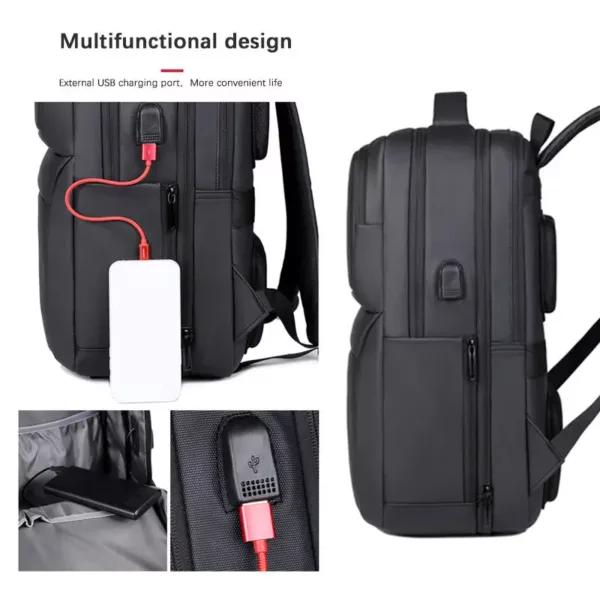
Say a buyer asks for a custom laptop backpack with a USB pass-through port. That sounds simple. It is not. The factory has to add a cable channel, a grommet, and a pocket for a power bank. That changes the pattern. It also creates a failure point at the grommet. The buyer should ask how the grommet is reinforced. If the answer is vague, walk away.
Wholesale laptop backpacks with stock designs are different. The buyer picks from existing patterns. Logo application is the only customization. Lead time is short. Cost is predictable. The trade-off is less control over the bag itself.
What to check before approving production
Approving production is not a signature. It is a checklist. For laptop backpacks, the reference gives clear guidance on measurement and specification.
First, check the dimension diagram. The reference says a spec should include a dimension diagram with measurement points, nominal values, and tolerances. The laptop compartment is the critical one. Measure the opening length, not just the internal height. A 15-inch laptop needs an opening that clears the device plus a sleeve. If the opening is too short, the user scratches the laptop every time they pull it out. The reference defines opening length as the usable length of the zipper. That is the number to check.
Second, check the foam thickness. The reference lists foam thickness as a measured value under specified pressure. A buyer who specs 10 mm of EPE foam should see 10 mm in the pre-production sample. Not 8 mm. Not 12 mm. The factory measures it with a thickness gauge. If they cannot show the measurement, the padding is a guess.
Third, check the strap anchors. The reference says to reinforce strap anchors, grab handles, and base seams. These zones receive repeated peak loads. A buyer should ask for a reinforcement patch at each anchor. The patch should be visible on the inside of the bag. If it is not there, the seam will fail first.
Fourth, check colorfastness. The reference defines colorfastness as resistance to color change during rubbing, washing, or light exposure. A laptop backpack rubs against coats, car seats, and office chairs. If the shell color transfers to a white shirt, the buyer gets a return. The factory should provide a colorfastness test result, not a verbal promise. The test method and acceptance limit go in the spec.
Fifth, check the claim control. If the buyer wants to write "water-resistant" on the hang tag, the factory has to define what that means. A PU coating at 3000 mm is different from a TPU lamination at 10,000 mm. The reference does not give a magic number. It says the performance test method, conditioning, sample size, and acceptance limits go in the spec. A buyer who approves production without those numbers is approving a claim they cannot defend.
Sixth, check the packing method. The reference includes packing method, shape-control inserts, polybag requirements, and carton quantity. Laptop backpacks need shape-control inserts. Without them, the bag arrives crushed. The foam padding takes a set. The bag looks used before it is sold. A buyer should ask for a photo of the packed carton, not just the carton marks.
A laptop backpack manufacturer that pushes back on any of these checks is not protecting the buyer. They are protecting their own timeline. The buyer who asks for the dimension diagram, the foam measurement, the strap reinforcement photo, and the colorfastness report is the buyer who gets a bag that matches the approved sample.
For buyers comparing suppliers across China, our guide to top backpack manufacturers covers what to look for. If the project involves recycled materials, the rPET backpacks page explains the trade-offs.