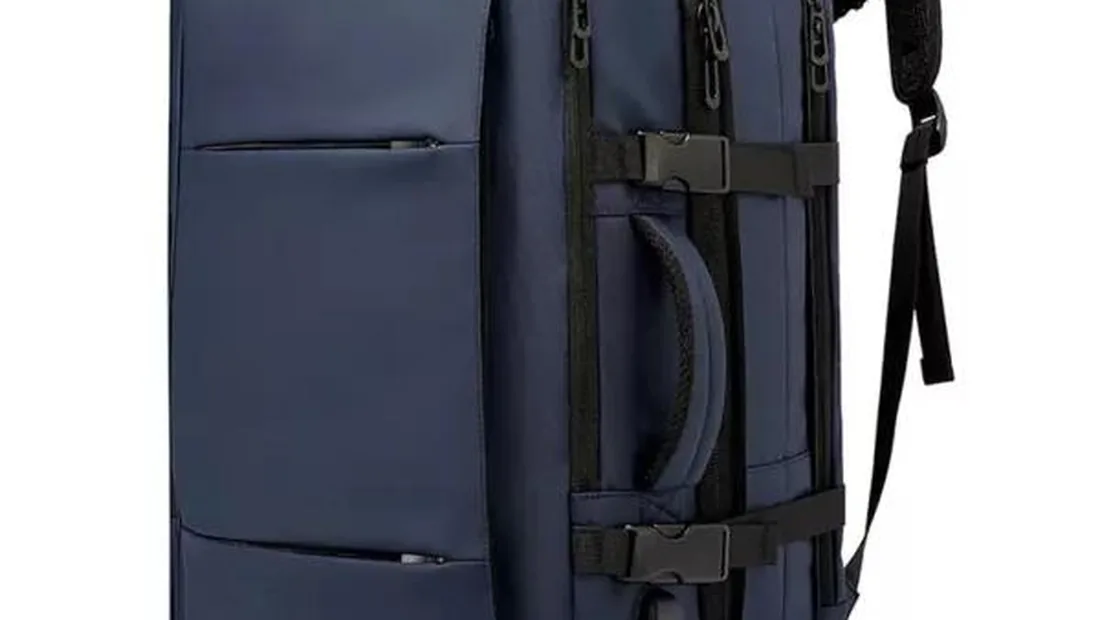
A drawstring backpack is a lightweight bag closed by pulling two cords. Those same cords become the shoulder straps. You see them at races, school events, trade shows and gym check-ins. The construction is simple, which is exactly why they work for bulk orders. But simple does not mean all drawstring backpacks are the same. Fabric, cord type, corner reinforcement and print area change the product completely.
I've answered questions about drawstring backpacks for sourcing managers, brand owners and event buyers for years. Most people start with the same confusion about names. Then they ask about fabric. Then they ask why one quote is half the price of another. This guide covers what actually matters when you order drawstring backpacks in volume.
What is a drawstring backpack (and how is it different from a cinch sack or gym sack)?
A drawstring backpack is a soft bag with a cord channel at the top. Pull the cords and the opening closes. Put the cords over your shoulders and the bag hangs against your back. No zipper. No frame. No padded straps.
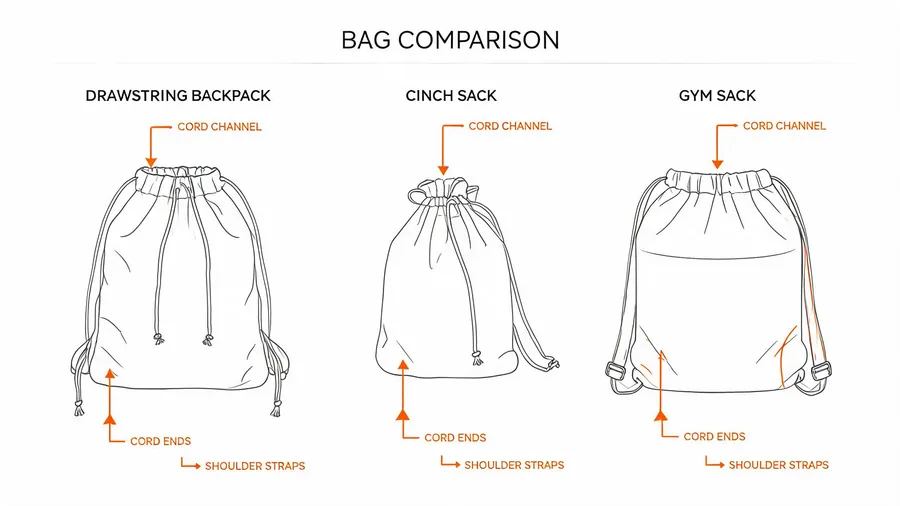
A cinch sack is the broader category. The term covers any bag closed by cinching cords, including bags with a flap, a front pocket, or a different strap setup. A gym sack is a drawstring bag used for sport. Same construction, narrower use case. In wholesale catalogs the three names are often used interchangeably. A buyer asking for a cinch sack and a buyer asking for a drawstring backpack usually want the same product. The difference only matters when you write a specification. Then you need one name and one set of measurements.
For procurement, treat a drawstring backpack as the default term. Use cinch sack when the bag has extra features like a flap or a structured back panel. Use gym sack only when the end user is clearly sport or fitness. This keeps your RFQ clear and stops a supplier from quoting the wrong construction.
Fabric options for bulk drawstring backpacks
Fabric is the biggest cost driver after quantity. It also controls print quality, weight, packability and lifespan. Four fabrics cover most bulk orders.
210D polyester
This is the default. 210D polyester is light, cheap and takes screen printing well. It holds color and folds flat for storage. Most event packs and school giveaways use it. The downside is durability. A 210D bag isn't designed for heavy books or daily abuse. It's a promotional bag that needs to survive an event and a few weeks after. That's fine, as long as you don't promise more.
Nylon
Nylon gives you higher strength-to-weight and better abrasion resistance than polyester of the same denier. It feels softer and quieter in the hand. The trade-off is cost and print behavior. Nylon can shift more under screen printing if the fabric isn't stabilized properly. For a premium giveaway or a bag meant to be reused, nylon is worth quoting.
Cotton canvas
Canvas brings structure and texture. It feels premium in the hand and takes embroidery cleanly. A canvas drawstring backpack is heavier and bulkier than a polyester one. It also costs more to ship. Brands that want a natural look or a bag that will be kept for years often choose canvas. Don't choose canvas for a one-day event give-away. The cost per bag will eat your budget.
Non-woven PP
Non-woven polypropylene is the cheapest option. It's common for conferences, festivals and short-lifespan promotions. The material is stiff, light and prints acceptably for simple logos. It doesn't handle heavy loads or repeated washing. A non-woven bag might last a few uses. If that fits your event, it's the right material. If you want the bag to become a daily gym sack, move up to woven polyester or nylon.
Cord types and closure construction
Cords look identical in photos. They're not.
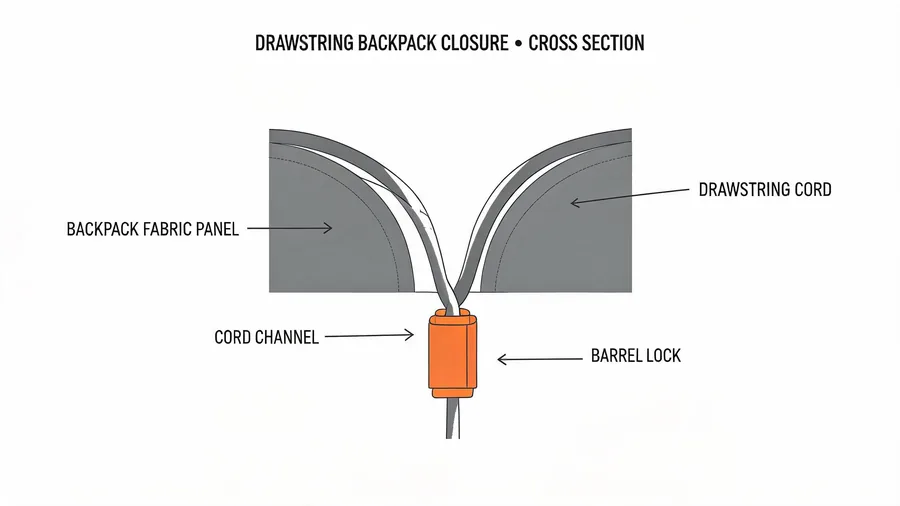
Polyester braided cord is the standard for reusable drawstring backpacks. It's soft, holds a knot well, and prints or dyes cleanly. PP rope is cheaper and stiffer. It works for event bags but feels rough against the neck and can be harder to pull through a tight cord channel. For a bag that will sit on someone's shoulders, polyester braided cord is the better choice.
The closure construction matters more than most buyers expect. There are two common methods. A grommet holds the cord at the bottom corners. A stitched cord channel runs the cord through a folded fabric tunnel at the top. Grommets are fast to install and cheap. But a grommet can pull out under load, especially if the fabric is thin or the bag is overstuffed. A stitched cord channel spreads the load across the seam and survives more abuse. If your bag will carry anything heavier than a T-shirt and a water bottle, specify a stitched channel.
Reinforced bottom corners are the third detail. The bottom corners take repeated peak loads when someone drops the bag or pulls the cords hard. A bartack or an extra fabric patch at each bottom corner stops the seam from opening. This is a small cost. It's the difference between a bag that dies at the event and one that lasts a season. Always put it in the spec.
For more on how backpack components fail under load, read our durability guide.
Pockets and functional add-ons
Most drawstring backpacks have no pockets. The bag is one open compartment. Add-ons change the cost, the weight and the print placement. Two add-ons cover most requests.
A front zip pocket gives secure storage for a phone, keys or a card. It's a simple panel sewn to the front with a zipper. The pocket adds fabric, a zipper and one sewing step. It also reduces the uninterrupted printable area on the front panel. If your logo is large, the pocket will force it smaller or off-center. Decide which matters more: the pocket or the full-front print.
A mesh side pocket holds a water bottle or a rolled umbrella. It's usually a stretch mesh panel sewn to one side. The pocket adds bulk and a small amount of weight. It also changes how the bag folds for packing. For event bags shipped in cartons, a side pocket can increase the carton count or make flat packing harder. Ask your supplier to confirm how the pocket affects the packing method.
Every add-on has a cost. A front pocket might add a few cents per bag at high volume. That sounds small. Across 5,000 bags it's real money. Quote the bag with and without each add-on. Then decide with the numbers in front of you.
Sizing conventions and printable area
Drawstring backpack sizes are stated as width by height, usually in inches or centimeters. A common adult size is around 14 by 18 inches. Kids' sizes run smaller. Event packs vary. But the finished dimensions are not the printable area. That's the mistake I see most often in RFQs.
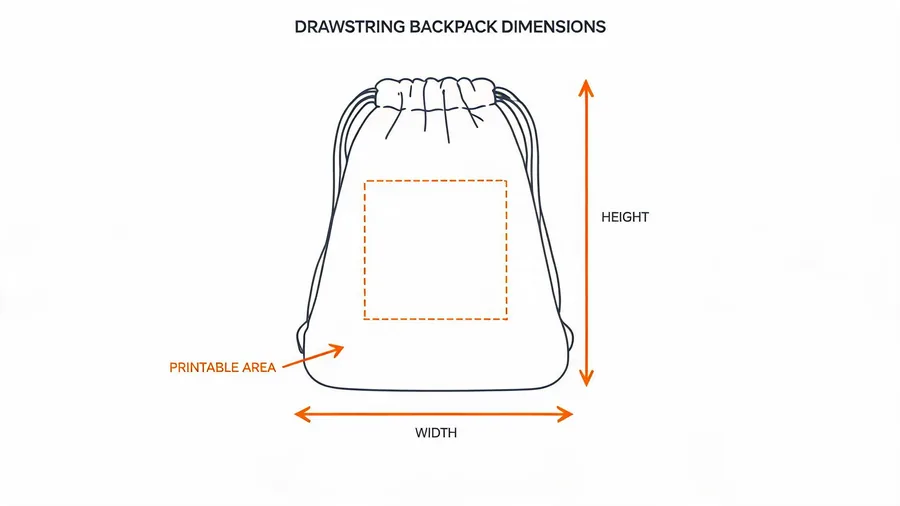
The printable area is the flat panel you can actually print on, measured inside the seams and away from the cord channel and bottom corners. A bag listed as 14 by 18 inches might have a printable area of only 12 by 14 inches once you exclude the top channel, the bottom seam and the side curves. Always ask for the printable area as a separate measurement. If you send artwork sized to the finished dimensions, the printer will have to shrink it or it will bleed into the seams.
For a quote, state both numbers. For example: finished size 14 x 18 inches, printable area 12 x 14 inches. This removes the most common source of artwork rejection at the proof stage. If you need help with capacity math, our size and capacity guide walks through how dimensions translate to usable volume.
Fabric vs print method vs typical use: a comparison table
The table below is the decision framework most bulk buyers need. It matches the four main fabrics to the print methods that work best and the use cases where each combination makes sense.
| Fabric | Best print method | Print notes | Typical use |
|---|---|---|---|
| 210D polyester | Screen printing | Clean, bright, fast; large runs keep unit cost low | Event giveaways, school packs, race kits |
| Nylon | Screen printing or heat transfer | Screen works with stabilized fabric; heat transfer needs a smooth face | Premium promos, reusable gym sacks |
| Cotton canvas | Embroidery | Holds stitches cleanly; screen printing can look textured | Brand merchandise, retail, corporate gifts |
| Non-woven PP | Screen printing | Simple logos only; fine detail can break up on the surface | Conferences, festivals, one-day promotions |
Heat transfer has limits on coated or textured surfaces. A coated nylon or a rough canvas can reject the transfer or look patchy. If you want heat transfer, ask the supplier to test your artwork on the exact fabric first. Don't approve a proof until you've seen the physical sample, not just a digital mockup.
For a deeper look at how hardware choices affect a bag's feel and lifespan, see our hardware guide.
What to put in a spec for a bulk quote
A clear spec is the fastest way to get comparable quotes. Most buyers send a photo and a target price. That produces three quotes for three different bags. Instead, send this.
Start with size. State finished width by height and the printable area separately. Then state fabric. "210D polyester" isn't enough. Give the denier, the coating if any, and the color. If you need a specific Pantone, state it. If you're flexible, say so.
Then state the cord type. Polyester braided cord or PP rope. State the closure: grommet or stitched channel. State the bottom corner reinforcement. A bartack or a fabric patch. If you don't specify, the factory will choose the cheapest option.
Then state the print method, artwork dimensions and placement. One logo on the front? Two logos? A full-panel print? The placement changes the sewing order and the cost. Give the artwork file format and the exact dimensions in the printable area.
Then state any pockets or add-ons. Front zip pocket? Mesh side pocket? A card slot inside? Each one is a line item. List them.
Finally, state packaging and target quantity. Polybag per piece? Bulk packed in cartons? A hang tag? The packaging changes the carton count, the freight cost and the unboxing experience. Target quantity lets the factory quote the right setup cost. A 500-piece order and a 50,000-piece order don't use the same production line.
If you want to see how a full backpack spec comes together from raw fabric to finished carton, our manufacturing process guide covers the steps in order.
Send that spec to three suppliers. Compare the quotes line by line. The cheapest quote is usually missing something. The most expensive one is usually quoting a heavier fabric or a print method you didn't ask for. The spec is what lets you see the difference.
Ready to get a quote? Contact us with your spec and we'll respond within 24 hours.
Frequently Asked Questions
What are those drawstring backpacks called?
They're most commonly called drawstring backpacks. You'll also see cinch sack or gym sack. A cinch sack is the broader category for any bag closed by pulling cords. A gym sack is a drawstring bag used for sport or fitness. In wholesale catalogs the three names are often used interchangeably.
What is the best drawstring backpack for bulk ordering?
For most bulk orders, a 210D polyester drawstring backpack with a stitched cord channel and reinforced bottom corners is the right balance of cost and durability. If the bag needs to last longer or carry more, move to nylon or cotton canvas. For a one-day event, non-woven PP is the cheapest option.
Where can I buy cheap drawstring bags in bulk?
Bulk drawstring bags are sold by promotional product suppliers, bag wholesalers and direct manufacturers. A factory-direct supplier usually gives you more control over fabric, cord type and print placement. Ask for a spec sheet, not just a price. The cheapest bag is often the one with the weakest seams.
What fabric should I choose for a custom drawstring backpack?
Choose 210D polyester for a lightweight, printable event bag. Choose nylon for higher strength-to-weight and a softer feel. Choose cotton canvas for a premium, structured look that takes embroidery well. Choose non-woven PP only for short-lifespan giveaways where cost is the main driver.