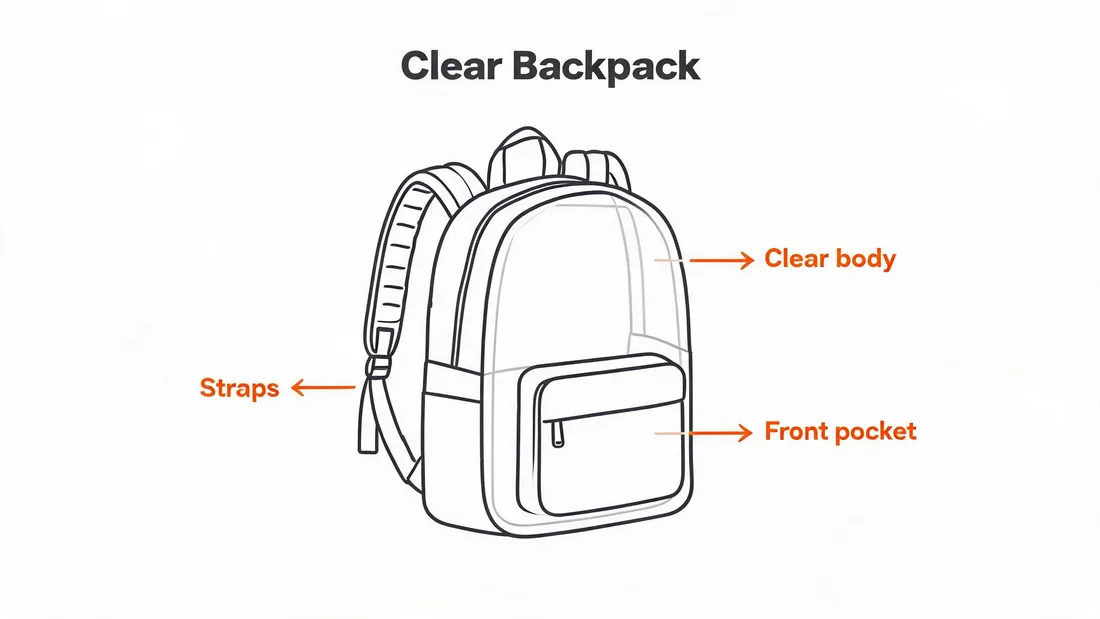
Wholesale clear backpacks are a category where the buying decision is made before the bag ever reaches a shelf. A venue says its entry staff need to see what is inside a bag without opening it. A district says the same thing for a school. Once that requirement lands, the bag has to be built around visibility, and every material choice follows from there.
This guide is written for the sourcing manager assembling a bulk order, not for the shopper picking one bag. It covers how clear-bag policies shape design, how PVC, TPU and see-through mesh actually differ, and what belongs in a spec sheet you can hand to any supplier for a quote.
Why Schools, Stadiums and Event Venues Ask for Clear Backpacks
Clear-bag policies are set by individual venues, districts and event organisers, and they vary widely. There is no single national rule. A stadium operator, a school board and an airport authority can each write their own wording, and the wording changes from season to season. That is the first thing to understand before you quote on a bulk run: you are not designing to one fixed standard. You are designing to visibility.
The reason the policies exist is throughput. Staff at a gate or a school entrance need to check contents quickly. If a bag is opaque, every check means opening it, feeling inside, and asking the owner to unpack. With a clear bag, the check is a glance. Entry lines move faster, and the security or front-office staff spend less time per person.
Say a school district orders 4,000 clear backpacks for a fall term. The buyer is usually a district procurement officer, not a parent. The order goes out in case quantities, and the bags have to survive a full academic year of daily use by students who are not gentle with them. A concert promoter ordering for a summer festival has a different problem: the bags get used hard for three days and then thrown away. Same category, different construction priorities.
Resellers and retail chains sit in between. They buy in case quantities and need a bag that photographs well, holds up in a returns process, and does not generate complaints about smell or splitting. If you are sourcing for that channel, the material and seam decisions below matter more than the logo.
How Clear-Bag Policies Shape the Design
The main compartment has to stay see-through. That single requirement drives most of the downstream decisions. Hidden pockets get dropped. Opaque linings get dropped. Any internal divider has to be clear or mesh, or it defeats the purpose. A bag with a solid back panel and a clear front is usually a compromise, and buyers should confirm with the venue whether a partial clear panel satisfies the policy before committing to a bulk run.
Straps, anchors and base seams take repeated peak loads. This is not unique to clear bags. It is the same construction discipline that goes into any backpack, as covered in the wholesale backpacks buying guide. The upper strap anchors to the top back panel with a reinforced box-X. The lower strap anchors near the bottom back panel or side gusset, and that lower anchor often carries more pull force than buyers expect, especially when the bag is lifted by one strap.
Edge binding is where clear bags fail first. The clear film folds over the edge of the panel and gets stitched down. If the binding is too tight, or the stitch density is too high for the film, the film splits at the fold after repeated flexing. The fix is a wider binding allowance, a stitch density matched to the film, and a panel map that shows exactly where the fold line sits.
Zipper choice matters because a clear body still needs a closure that survives daily opening and closing. A lightweight coil zipper that works on a cosmetic pouch will not survive a school year on a backpack. Match the zipper type and slider size to the load the bag will carry, not to the look you want in a product photo.
Clear PVC vs TPU vs See-Through Mesh
Clarity is the first difference. PVC and TPU films both read as glass-clear. Mesh is see-through but not transparent. You can identify what is inside a mesh bag by outline and colour, but you cannot read a label through it. If the policy wording says contents must be visible, mesh usually satisfies it. If the wording says the bag must be transparent, mesh may not. Confirm the exact wording before you commit.
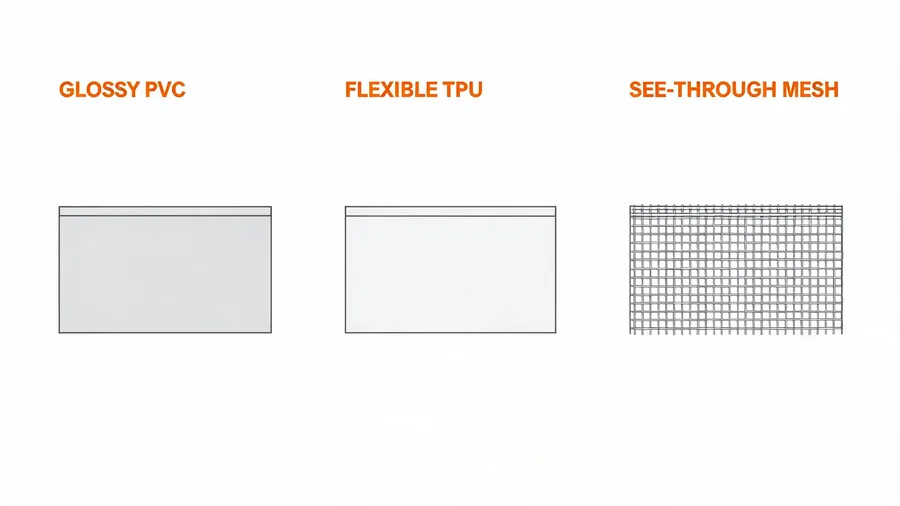
Cold-weather behaviour is the second difference, and this is where suppliers commonly report problems. PVC can stiffen as temperatures drop, and a stiff film cracks rather than flexes. TPU is generally reported to stay flexible across a wider temperature range. Neither statement is a guarantee for a specific film. Ask any supplier for the cold-flex behaviour of the exact film they propose, and ask what test method they use to support the claim. If they cannot answer, that is your answer.
Odour and hand feel differ between film types, and this affects how a bag is received on arrival. A film with a strong plastic smell will generate complaints from a school district or a retail buyer, even if the construction is sound. Ask for a sample and smell it. Ask how the film is stored and whether it is aired before packing.
Recyclability is worth raising before a bulk run is committed. PVC is difficult to recycle in most municipal streams. TPU and some mesh fabrics have different end-of-life profiles. If your buyer has a sustainability commitment, or if you are sourcing for a channel that asks about it, this conversation belongs in the sampling stage, not after the order ships. The rPET backpacks page covers how recycled content is specified in this category.
A Comparison Table Buyers Can Take to Their Supplier
The table below is a starting point, not a specification. Final choice depends on your climate, your use case and the exact policy wording you are designing to. Print it, take it to your supplier, and fill in the last column with your own requirement.
| Material | Clarity | Durability consideration | Best use | Your policy requirement |
|---|---|---|---|---|
| Clear PVC film | Glass-clear | Can stiffen in cold; suppliers commonly report cracking risk in low temperatures | High-volume event and school programs in mild climates | |
| TPU film | Glass-clear | Generally reported to stay flexible across a wider temperature range; higher material cost | Programs where cold-weather flexibility matters | |
| See-through mesh | See-through, not transparent | Resists tearing; shows contents in outline only | Lightweight and ventilated use; venues that accept outline visibility |
One more column worth adding when you talk to a supplier: what happens at the fold. A film that performs well flat can still split at the edge binding. Ask for a sample with the actual binding construction, not a flat swatch.
Seams, Edge Binding, Zippers and Straps That Survive Bulk Use
Bulk runs fail in predictable places. Strap anchors, grab handles and base seams see repeated peak loads, and those are the zones to reinforce first. A reinforcement patch at the anchor point costs little and prevents the most common return reason.
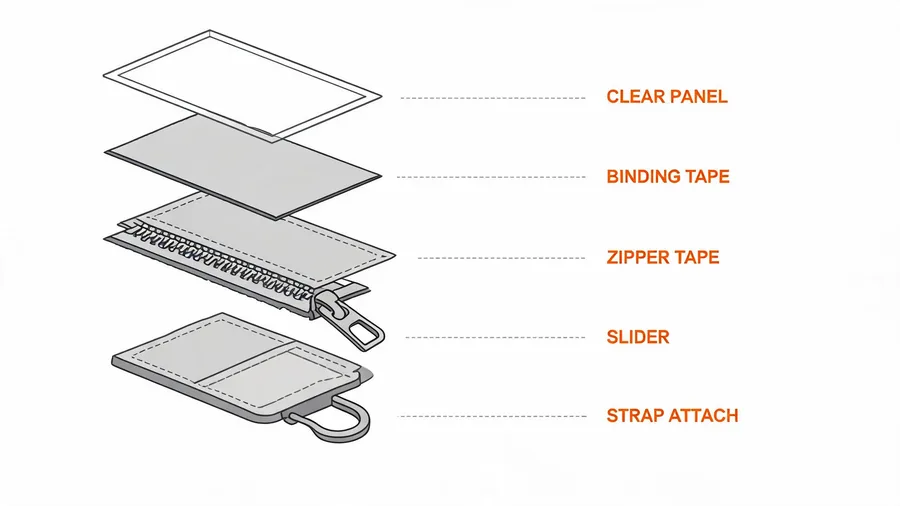
Edge binding on clear panels should be specified so the film does not split at the fold. This means agreeing the binding width, the stitch type and the stitch density in the spec, not leaving it to the line. If you are ordering embroidered decoration on the same bag, the embroidered backpacks guide covers how needle and backing choices interact with panel construction.
Zipper type and slider size should match the load the bag will carry. A clear backpack used by a student carries books and a laptop. A clear backpack used at a stadium carries a phone and a wallet. The same zipper will not suit both. Specify the zipper by type, size and slider, and ask for the pull force the closure is designed for.
Ask for a panel map, seam types and stitch density in the spec so the bulk run matches the sample. This is standard practice in bag manufacturing, and any supplier should be able to provide it. If the spec does not define these, the factory will make its own choices, and those choices may not match the sample you approved.
Printing and Branding on Clear Material
Print on clear film is visible from both sides. That is a design fact, not a problem, but it means placement and opacity need to be agreed up front. A logo printed on the front panel of a clear bag will be read in reverse from the inside. If that matters, put the artwork on a panel that is backed, or accept the mirrored read.
A printed panel can reduce visibility. Artwork that covers too much of the main see-through area can push a bag out of compliance with the policy it was bought for. Keep the main compartment clear and put branding on straps, a base panel, a small corner patch or a hang tag. If your buyer needs a large logo, discuss it with the venue before the bulk run.
Decoration method and colour reference should be confirmed on the sample before bulk production. Mesh takes print differently from film. The same artwork will not look identical on both. Ink sits on the surface of mesh and can fill the openings, which changes both the appearance and the breathability of the panel. Test the artwork on the actual material before you approve it.
For school and venue programs, the clear backpacks for schools and venues page covers how branding and policy compliance interact in that channel.
What to Send in a Bulk Clear Backpack Spec
A spec sheet that a factory can quote from needs to be complete. The checklist below is the one to copy.
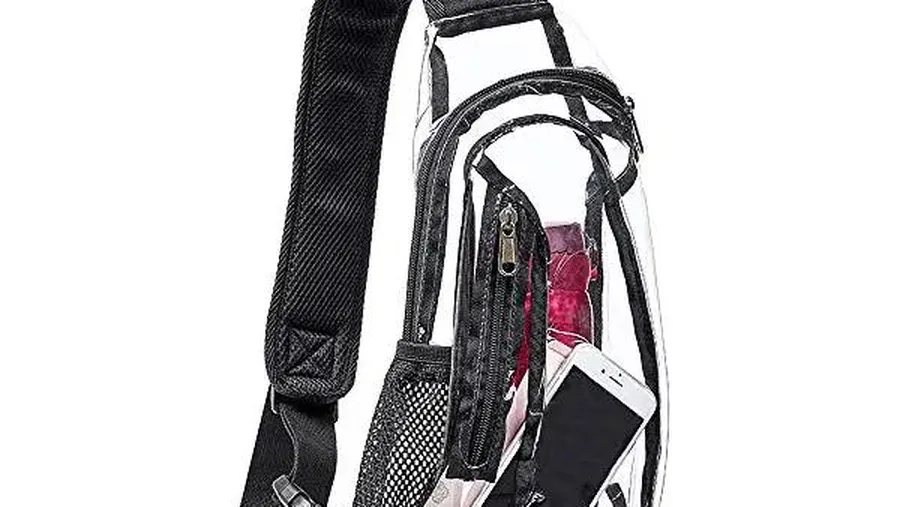
- Product name, intended use, target user, size, capacity and maximum recommended load.
- A dimension diagram with measurement points, nominal values and tolerances. Height, width, depth and opening length should each be defined against stated reference points.
- Material composition, construction, thickness, coating and approved colour. For clear film, state the film type and the thickness with the tolerance.
- Panel map, seam types, seam allowances, stitch density and reinforcement details. This is where the edge binding spec lives.
- Zipper type, size, slider and pull force requirement.
- Artwork dimensions, placement coordinates, process and durability requirement.
- Label content, placement, care instructions and traceability code.
- Packing method, polybag requirements, carton quantity and carton marks.
If you are sourcing across more than one bag category, the same spec discipline applies. The school backpacks page shows how the checklist maps onto a different product type.
When you are ready to price a bulk clear backpack order, send the completed spec through the contact page and ask for a quote against your actual requirements.
Frequently Asked Questions
Where can I buy clear backpacks in bulk?
Bulk clear backpacks are sourced directly from bag manufacturers, usually through a spec-and-quote process rather than a retail listing. You send the material, dimensions, construction and printing requirements, and the factory quotes against that spec. Resellers, school districts and event organisers typically order in case quantities. The key is to work from a written spec so the bulk run matches the sample you approved.
Where can I buy bulk backpacks wholesale?
Wholesale backpacks are bought from manufacturers or trading companies that produce in volume. The route is the same as any custom bag order: define the product, agree a sample, confirm the spec, then place the production order. For clear backpacks specifically, confirm the venue or district policy wording before you commit, because that wording determines whether film or mesh is the right material.
What should a bulk clear backpack spec include?
At minimum: product name, intended use, target user, size, capacity and maximum recommended load; a dimension diagram with measurement points, nominal values and tolerances; material composition, construction, thickness, coating and approved colour; a panel map with seam types, seam allowances, stitch density and reinforcement details; zipper type, size and slider; artwork dimensions, placement, process and durability requirement; label content and placement; and packing method, carton quantity and carton marks.
How do clear PVC, TPU and mesh backpacks compare for bulk orders?
PVC and TPU films are glass-clear; mesh is see-through but shows contents in outline only. Suppliers commonly report that PVC can stiffen in cold and crack, while TPU is generally reported to stay flexible across a wider temperature range. Mesh resists tearing and ventilates well but reads differently in print. Odour, hand feel and recyclability also differ, so ask for a sample and confirm the cold-flex behaviour of the exact film before you commit to a bulk run.