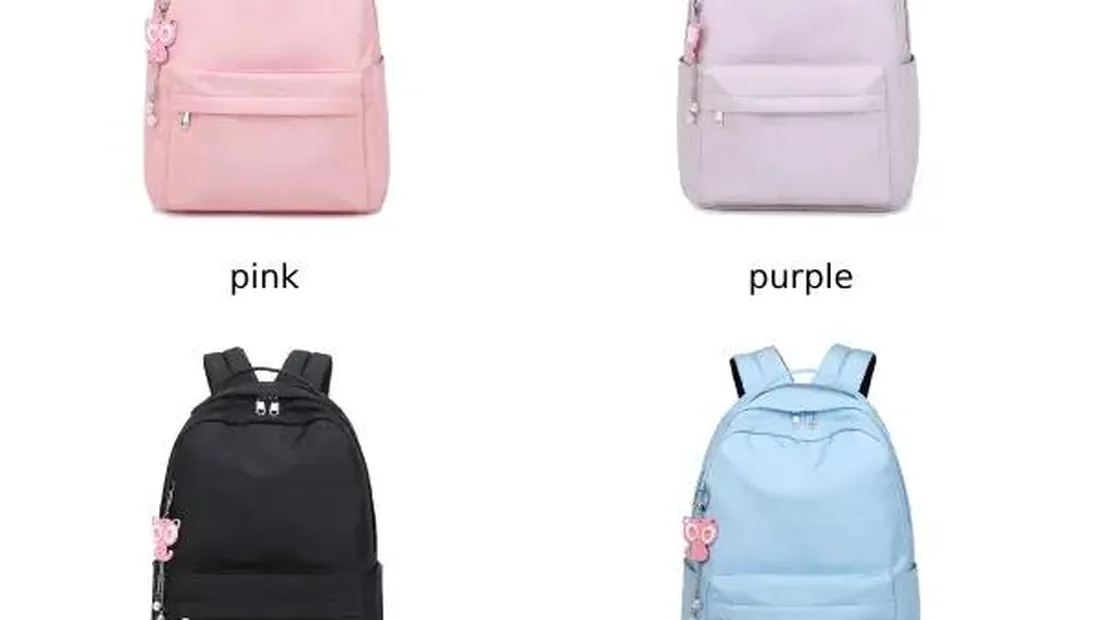
A custom clear backpack order usually starts with a policy, not a spec sheet. A school district sends you the rule. A stadium sends you the rule. Your job is to build a bag that satisfies that rule and still holds up for a full season or a full school year. That is harder than it looks.
Clear backpacks look simple. They are not. The material that makes the bag transparent is also the material that cracks, yellows, and pulls away from the zipper tape. Most failed clear backpack programs are not failed policies. They are failed material and seam choices.
This guide covers what buyers need to know before placing a volume order for custom clear backpacks. It covers materials, construction, branding, and the questions you should ask a factory before you commit.
Why Clear-Bag Policies Exist and What They Actually Require
Clear-bag policies are a security response. The goal is simple: let staff see what is inside without opening every bag. A transparent panel removes the need for a manual search in most cases. That speeds up entry lines and reduces the number of people touching a student's or fan's belongings.
Most policies come from the venue, the district, or the event operator. They set the size limit. They decide whether the bag must be fully transparent or only have a clear panel. They decide whether colored trim is allowed and how much. None of that is up to the factory. We build to the policy you bring us.
You will see size limits written in inches or liters. You will see rules about the number of compartments. Some venues allow one clear compartment plus one small opaque pocket. Some allow none. Some policies name a specific bag style. Others just say "clear bag no larger than."
The only safe move is to get the current written policy from the authority that will enforce it. Policies change. A district can update its rule between the bid and the delivery. Confirm the size, the transparency requirement, and the logo rules before you approve the sample. Then confirm again before production.
One more thing. "Clear" does not mean the same thing to every buyer. Some want water-clear film. Some accept a slight haze. Some want a tinted transparent panel. The policy may specify a transparency level or it may not. If it does not, you need to decide and write it into the spec.
Material Options for Transparent Panels
Clear backpacks use one of a few transparent or semi-transparent materials. Each behaves differently under cold, heat, folding, and repeated zipper use. The choice affects price, weight, and how long the bag looks new.
Transparent PVC film
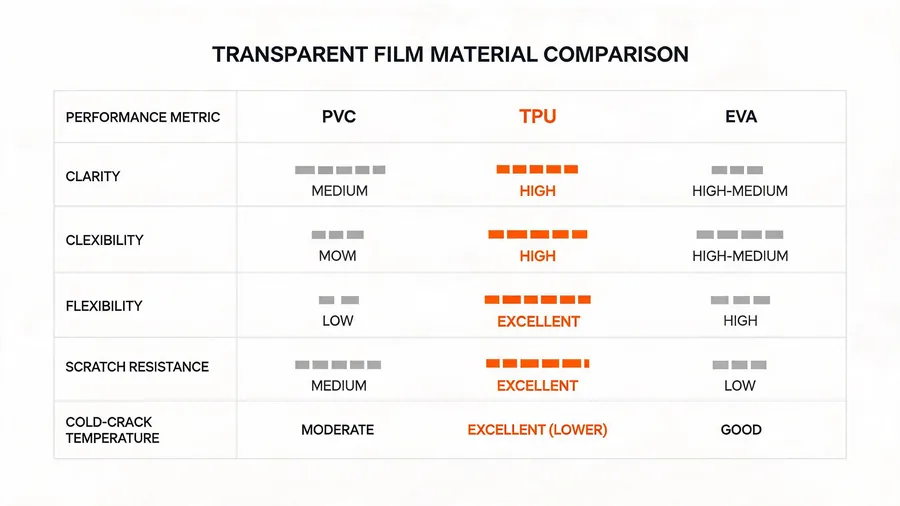
PVC is the most common choice for budget clear backpacks. It is stiff, inexpensive, and easy to cut and sew. The stiffness gives the bag some structure, which helps it stand open. The downside is cold performance. PVC gets brittle in low temperatures and can crack at fold lines or stitch holes. It also yellows over time, especially with UV exposure. For an indoor school bag or a single-season stadium bag, PVC is usually acceptable. For a bag that lives in a car trunk in a cold state, it is a risk.
TPU film
TPU is the upgrade. It stays flexible in cold weather, resists cracking better than PVC, and handles repeated folding without breaking down as quickly. It also resists yellowing longer. The cost is higher. TPU is also softer, which means the bag may need more structure from piping, binding, or a base panel to hold its shape. For districts that want a two-year bag or venues that order once and reuse for multiple seasons, TPU often wins on total cost.
Mesh panels
Mesh is not fully transparent, but some policies accept it. A fine mesh panel lets staff see shapes and colors without giving a water-clear view. Mesh breathes, weighs less, and does not crack. It also does not yellow the way film does. The tradeoff is visibility. If the policy says contents must be clearly visible, mesh may not pass. Check the wording.
Clear PVC with mesh accents
A common compromise is a clear PVC front panel with mesh side panels or a mesh back panel. This cuts weight, improves airflow, and still gives the required front visibility. It also reduces the total amount of film, which lowers the cracking risk at the sides.
Some buyers ask about polycarbonate or acrylic sheets. Those are rigid plastics, not bag film. They crack easily at drill holes and are too stiff for a soft backpack. We do not recommend them for volume school or venue orders.
Durability Problems Specific to Clear Materials
Clear backpacks fail in predictable ways. A buyer who knows these failure modes can ask the right questions and avoid a costly replacement order.
Seam stress at the film edge
The stitch line where clear film meets fabric is the weak point. Every needle hole is a tear starter. When the bag is overstuffed, the film pulls against the thread. Over time, the holes elongate and the film tears along the seam. This is the most common clear backpack failure we see.
The fix is a wider seam allowance on the film, a reinforcing binding tape over the stitch line, and a stitch length chosen for film rather than fabric. A short stitch on PVC creates a perforation line. A longer stitch with a heavy thread holds better on film.
Film cracking at fold lines
Clear film does not fold like fabric. It creases. Repeated creasing at the same line, usually near the bottom corners or where the bag is stored flat, creates a stress line. PVC cracks first. TPU resists longer but still shows crease marks.
Construction helps. A gusseted bottom panel reduces sharp folds. A bag with a flat bottom and structured sides keeps the film from collapsing into a hard crease. Some buyers add a fabric base panel so the film does not carry the bottom load at all.
Zipper tape delamination
The zipper tape is sewn or welded to the clear film. On cheap clear backpacks, the bond fails and the zipper pulls away from the film. This happens because the film and the tape expand and contract at different rates, and because the stitch holes weaken the film edge.
The fix is a reinforced zipper tape, a welded seam where the material allows it, and a fabric binding that covers the joint. A well-built clear backpack has a fabric strip between the zipper tape and the film edge. That strip takes the stress instead of the film.
Yellowing and haze
All clear films yellow eventually. PVC yellows fastest, especially in sunlight or fluorescent light. TPU holds clarity longer. If the bag will be used outdoors or stored in a hot gym, specify a UV-stabilized film. It costs more and it matters.
Haze is different from yellowing. Haze is a surface change from abrasion and cleaning chemicals. A bag wiped down with a harsh cleaner can cloud over. The policy may require staff to inspect contents, so a hazy panel becomes a problem even if the bag is structurally fine.
Construction Choices That Extend Clear Backpack Life
A clear backpack is only as good as the decisions made around the film. These are the choices we walk through with every volume buyer.
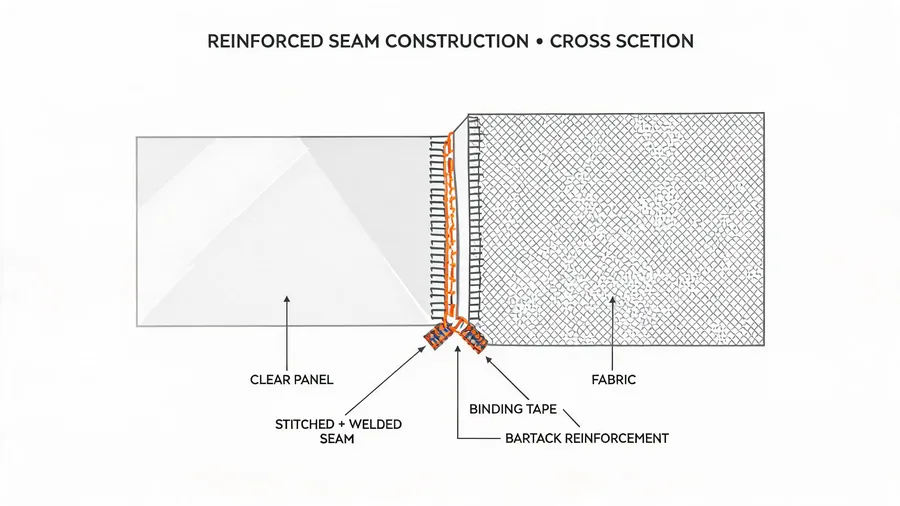
Bound seams on every film edge
Binding tape is non-negotiable on a bag that will be used daily. It covers the raw film edge, protects the stitch holes, and gives the seam a second line of defense. Without binding, the film edge is exposed and the bag will fail at the seam.
Structured base and back panel
A fabric base panel with a plastic board insert keeps the bag upright and takes the bottom load off the film. A padded back panel adds comfort and gives the bag a stable shape. Both reduce the folding and creasing that lead to cracks.
Reinforced stress points
The top corners near the zipper, the strap attachment points, and the bottom corners all take repeated peak loads. A reinforcement patch behind the film at these points spreads the force. On a clear backpack, these patches are usually fabric and sit behind the film so they do not block visibility.
Strap anchor design
Straps should anchor to fabric, not to film. The upper strap anchor sews into the back panel or a fabric top strip. The lower anchor sews into the base panel or a side fabric gusset. If a strap is sewn directly to clear film, the first hard pull will tear it out.
For buyers comparing our clear backpacks to standard school backpacks, the same load principles apply. We cover those in more detail in our school backpacks guide.
Branding Options That Work on a Transparent Panel
Branding a clear backpack is different from branding a fabric bag. The logo has to be visible, durable, and it cannot block the transparency that the policy requires.
Screen printing on the film
Screen printing works on PVC and TPU. The ink sits on the surface and is visible from the outside. The print area must be kept small enough that the bag still meets the transparency requirement. A large printed area defeats the purpose of the clear panel.
Heat-transfer logos
Heat transfers bond well to film and give a clean edge. They work for multi-color logos and fine detail. The same size rule applies: keep the logo off the main viewing area or keep it small.
Fabric patches and woven labels
A woven label or fabric patch sewn to the film edge or a fabric strip is the most durable option. It will not crack, peel, or yellow. It also gives a premium look. The tradeoff is that it only works at the edges or on a fabric panel, not in the middle of the clear film.
Printed webbing straps
If the bag has fabric straps, the brand can go there. Printed webbing holds a logo well and does not affect the clear panel at all. This is a common choice for stadium giveaways where the bag itself is the brand surface.
Some buyers ask about embossing on clear film. It is possible on thick TPU but rarely worth the tooling cost for volumes under several thousand units. Screen printing or a heat transfer is usually the better value.
Comparing Clear Backpack Material Options
The table below is a quick reference for the three main transparent material choices. Use it to start the conversation, not to end it. The right choice depends on the policy, the climate, the expected lifespan, and the budget.
| Material | Clarity | Cold performance | Yellowing resistance | Typical use |
|---|---|---|---|---|
| PVC film | High, water-clear | Brittle below freezing | Low, yellows fastest | Single-season, indoor, budget orders |
| TPU film | High, slight haze possible | Stays flexible | Good, holds clarity longer | Multi-season, outdoor, premium orders |
| Mesh panel | Partial, shapes visible | No film to crack | No yellowing | Policies that accept partial visibility |
| PVC front + mesh sides | Front clear, sides partial | Depends on front panel | Front panel yellows over time | Weight reduction without losing front view |
Questions to Ask Any Clear Backpack Factory
Before you place a volume order, ask these questions. A factory that cannot answer them clearly is a risk.
- What film thickness do you recommend for a daily-use school bag versus a one-event stadium bag?
- Do you bind every film edge, or only the main seams?
- Do the strap anchors sew into fabric or directly into the film?
- Can you provide a UV-stabilized film option, and what is the cost difference?
- What is your stitch length and thread choice on the film seams?
- Do you have a sample from a previous clear backpack order I can inspect?
The last question matters most. A factory that has built clear backpacks before has learned the failure modes. A factory that treats clear film like fabric will produce a bag that looks fine for three weeks and then fails.
Ordering Custom Clear Backpacks: What to Prepare
When you are ready to request a quote, bring the policy document, the target quantity, the logo artwork, and the delivery date. That is enough to start.
We will ask about the transparency requirement, the size limit, and whether the bag needs one clear compartment or a fully clear body. We will ask about the climate and the expected lifespan. Those answers determine the film choice and the seam construction.
For buyers who also carry standard backpacks in their line, the same production process applies. Our laptop backpacks and travel backpacks pages show how we handle structured bags with multiple compartments. The clear backpack order follows the same steps, just with different materials at the panel level.
One note on timing. A custom clear backpack order with a new logo and a new size takes longer than a stock bag with a printed logo. Plan for sampling, approval, and production. If the policy has a hard start date, work backward from that date and add buffer. Rushed clear backpack orders are where seam failures happen.
If you are not sure whether a clear backpack or a mesh drawstring bag fits your venue policy, our drawstring mesh backpacks page covers the alternative. Some venues accept a mesh bag where a clear backpack is not required. It is worth checking.
Ready to talk through your policy and get a sample? Contact us with the policy document and we will respond within one business day.
Frequently Asked Questions
What size clear backpack do most schools require?
There is no universal size. Each district sets its own limit, usually in inches or liters. Bring the written policy to your factory and build to that number. Never assume one size works for every district.
Do clear backpacks have to be fully transparent?
Not always. Some policies require the entire bag to be clear. Others allow a clear front panel with fabric sides and back. Check the exact wording from the venue or district before you spec the bag.
Why do clear backpacks crack so easily?
The film is stiff and the stitch holes act as tear starters. Cold weather makes PVC brittle, and repeated folding creates stress lines. Bound seams, a structured base, and TPU film all reduce the cracking risk.
Can you print a logo on a clear backpack without blocking the view?
Yes. Keep the print small and positioned away from the main viewing area. Screen printing and heat transfers work on film. Woven labels and printed webbing straps are more durable and do not affect the clear panel at all.