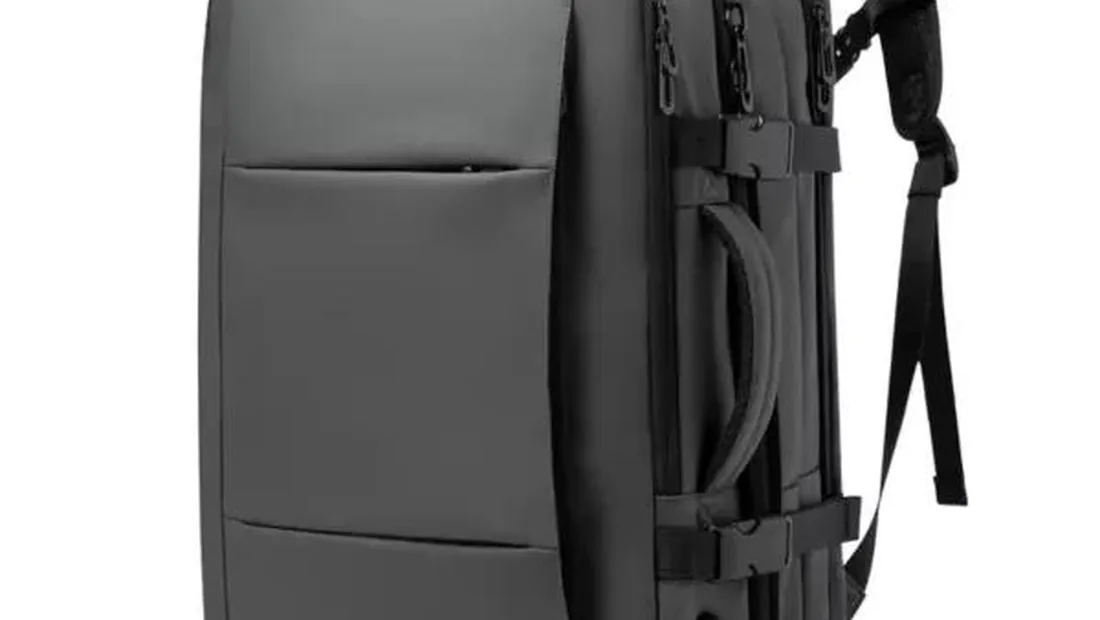
Wholesale backpack sourcing starts with a buyer scenario. A school district needs five hundred bags that survive daily use. A corporate gifting program wants two thousand bags that look sharp at an event. A retail private label brand needs a backpack that can sit on a shelf next to established names. Same product category. Completely different specifications.
Most buyers jump straight to price per unit. That's the wrong first question. Fabric, hardware, padding, and logo method drive the quote more than the bag's shape. Get those decisions right and the price conversation becomes simple. Get them wrong and you pay twice: once for the order and once for the failures.
Start With the Buyer Scenario, Not the Bag
Say a school district wants backpacks for a weekend food program. The bags will be stuffed with canned goods and handed to families in parking lots. Durability matters more than appearance. A corporate gifting program has the opposite problem. The bag sits in a gift box and gets used lightly, but it must look expensive. A retail private label brand sits between the two. It needs perceived quality at a price that leaves margin.
Each scenario points to different materials and hardware. The table below shows how one factory conversation changes depending on who the buyer is.
| Buyer scenario | Fabric direction | Hardware tier | Lead-time consideration |
|---|---|---|---|
| School program or charity distribution | Heavier polyester or nylon with a simple PU coating; prioritize abrasion resistance over hand feel | Mid-range zippers and buckles; avoid the cheapest plastic clips but do not pay for metal | Standard production window works; avoid complex logo processes that add sampling days |
| Corporate gift or event giveaway | Lighter coated polyester with a clean surface; hand feel and logo appearance matter more than extreme durability | Low to mid tier is usually acceptable; the bag is a keepsake, not a daily carry item | Short lead time often matters; stock fabrics and simple logo methods help |
| Retail private label | Fabric choice depends on the target price point, but consistency and colorfastness become critical | Upper mid tier; buyers notice zipper smoothness and clip quality | Expect sampling rounds; pre-production approval adds days but prevents costly field failures |
That table is a starting point. The real decisions happen one material at a time.
Fabric Weight and Coating: Where Durability Is Decided
Denier and GSM are specification terms, not strength guarantees. A 600D polyester fabric tells you the yarn linear density. It doesn't tell you how tightly the fabric is woven. It doesn't tell you how much coating is applied, or how the finished panel will hold up under a seam. Two fabrics can share a denier number and perform very differently.
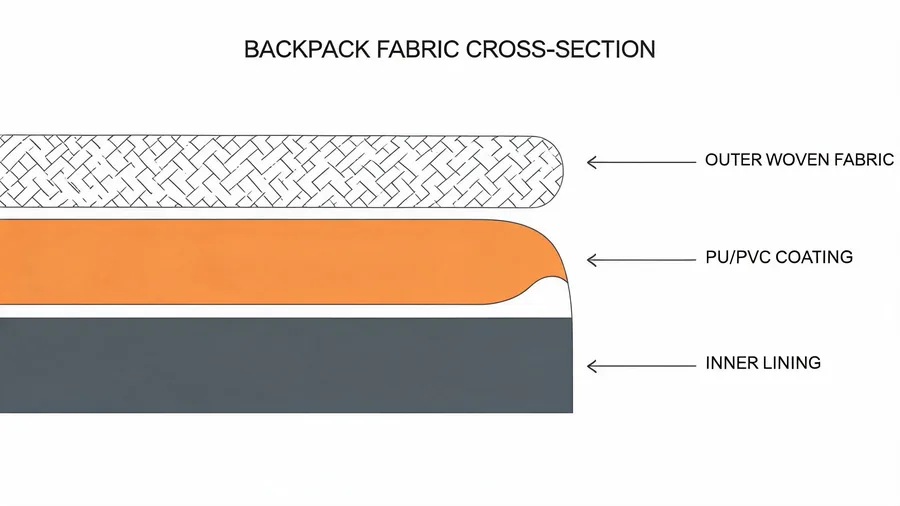
Polyester wins on dimensional stability and printability. It holds color well and costs less. Nylon wins on strength-to-weight and abrasion resistance. It feels softer and quieter through hardware. Canvas brings structure and a natural texture, but it absorbs moisture and adds weight. The right choice depends on the buyer scenario, not on a single spec sheet number.
Coating changes everything. A polyurethane coating improves water resistance and can make a fabric easier to sew. A polyvinyl chloride coating is stiffer and more protective. Thermoplastic polyurethane lamination creates a flexible waterproof layer that works for welded constructions. Coating weight and hand feel matter for sewing speed and logo adhesion. A heavy coating can reject embroidery thread tension. A slick surface can make heat transfer logos peel.
Ask any supplier for the fabric count, coating weight, and hand feel, not just the denier. That's where durability gets decided. For more on how fabric choices flow into finished product lines, see the school backpack and travel backpack pages.
Single vs Double Compartment Structures
A single compartment backpack is simpler. Fewer panels, fewer zippers, lower labor cost. It works for gym kits, event giveaways, and charity distributions where the bag carries one category of item. A double compartment backpack adds a front pocket or a divided main body. That second compartment changes the quote and the perceived quality.
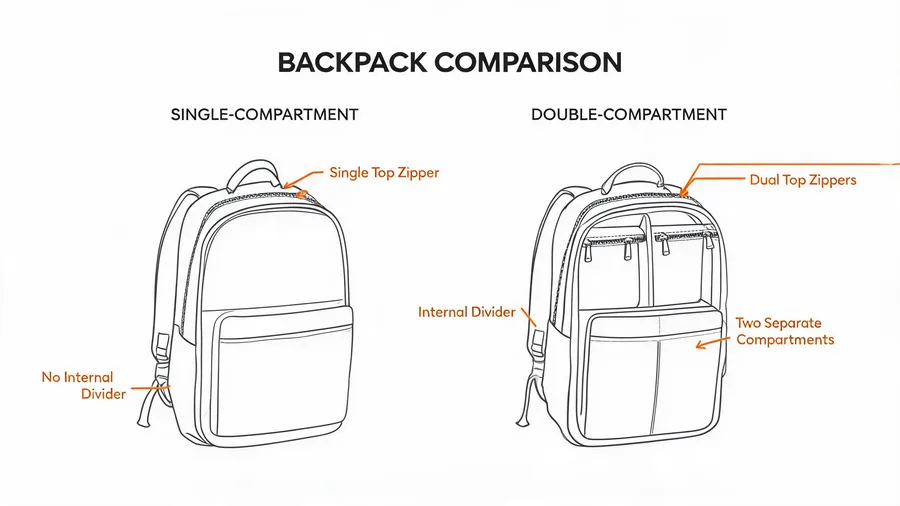
Compartment geometry controls load movement. A well-placed divider keeps dense items close to the back panel. That reduces leverage and sway. A frame sheet or semi-structured body holds the bag's shape when it's partially loaded. The frame sheet limits collapse and spreads pressure. Semi-structured construction uses foam, board, or piping to create shape without a full load-bearing frame.
For retail private label, the second compartment is often worth the cost. Buyers interpret it as better organization. For a school distribution program, the single compartment may be the smarter buy. The money saved on construction can go into a heavier fabric or better zippers.
Strap and Back-Panel Padding as a Durability Lever
A backpack strap is a system. Webbing, foam core, mesh facing, and the attachment point all share the load. The upper strap anchors to the top back panel. The lower strap anchors near the bottom. That lower anchor carries more pull force than most buyers expect, especially when someone lifts the bag by one strap.
Open-cell foam is soft and breathable. It compresses readily and can absorb moisture unless protected. Closed-cell foam is firmer and low-absorption. Spacer mesh adds cushioning and airflow. A sternum strap keeps the shoulder straps from drifting outward. A hip belt stabilizes the pack and can transfer part of the load toward the pelvis. Not every backpack needs a hip belt. A school bag carrying books does. A corporate gift bag does not.
Reinforce strap anchors, grab handles, and base seams. These zones take repeated peak loads. A bag that fails at the strap anchor fails completely. Ventilation and load stability trade off. More air space between the back panel and the wearer feels cooler but moves the load farther from the body. For a detailed breakdown of strap construction, read the backpack straps guide.
Hardware Quality Tiers: Zipper Gauge and Buckle Type
Zipper gauge is a durability indicator. A heavier gauge resists tooth separation and slider wear. It also costs more. Buckle and clip material matters just as much. Cheap plastic clips crack in cold weather. Nylon hardware is quieter and lighter. Metal hardware feels premium but adds weight and cost.
Hardware failure is a common warranty issue. A zipper that jams on day one generates returns. A buckle that snaps during normal use kills a retail brand. Match the hardware tier to the buyer scenario. School programs need mid-range zippers that survive daily use. Corporate gifts can use lighter hardware because the bag is a keepsake. Retail private label should spec upper mid tier because the end customer notices zipper smoothness immediately.
Ask any supplier what zipper gauge they recommend for the fabric weight and the intended use. If they can't answer, keep looking. The backpack hardware guide covers this in more depth.
Logo Process and Fabric Interaction
Embroidery, heat transfer, and woven labels behave differently on coated fabric. Embroidery works well on canvas and heavier polyester. It can pucker on thin coated nylon. Heat transfer adheres best to smooth surfaces but can peel from heavy PU coatings. Woven labels sew onto almost anything but add a separate production step.
Logo process changes minimums and sampling needs. Embroidery requires digitizing and a stitch sample. Heat transfer requires a strike-off to approve color and adhesion. Woven labels need a loom setup. Pantone color matching is the production control that keeps all of these consistent. A lab dip or strike-off approval prevents a logo that looks maroon in the sample and orange in bulk.
Don't choose the logo method after the fabric. Choose them together. The fabric surface determines what will stick, sew, or bond.
Lead Time and Sampling: What to Ask Before You Commit
Sampling isn't optional. A proto sample evaluates concept and shape. A fit sample tests strap geometry and access. A pre-production sample uses the intended bulk materials. The golden sample is the approved reference for production workmanship. Skipping these stages saves days and risks the entire order.
Lab dips and strike-offs approve color and print before bulk fabric is cut. Change control matters after approval. A supplier that lets you change the fabric weight after the golden sample is approved is a supplier that will change it again during production. Backpack bulk production takes 15 to 20 days. Orders over 10,000 pieces or complex structures take 25 to 30 days. Small-batch express shipping via DHL, FedEx, UPS, or TNT takes 5 to 7 working days door to door. Sea freight takes 40 to 45 days. Build those numbers into your calendar before you commit.
One closing note. If you have a spec sheet, a target quantity, and a buyer scenario, send it over. A clear spec gets a clear quote faster than a vague inquiry ever will. Use the contact page to start that conversation.
Frequently Asked Questions
Where can I buy backpacks in bulk for charity?
Charity buyers typically source from manufacturers or trading companies that handle custom orders. Ask about fabric weight, coating, and hardware tier before requesting pricing. A school or food program needs durability, not a premium finish. Request a proto sample and confirm lead time before committing to a delivery date.
What should I check before ordering wholesale backpacks in bulk?
Check the fabric denier, GSM, coating type, and hand feel. Confirm the zipper gauge and buckle material. Ask which logo method works with the chosen fabric. Review the sampling stages and lead time. Get all of this in writing before you approve a pre-production sample.
How do I choose between polyester and nylon for a bulk backpack order?
Polyester is dimensionally stable, prints well, and costs less. Nylon has higher strength-to-weight and better abrasion resistance. Choose polyester for event giveaways and price-sensitive retail. Choose nylon for daily-use bags that must survive rough handling. Coating and weave affect performance more than the fiber name alone.
What logo method works best on coated backpack fabric?
It depends on the coating. Embroidery works on canvas and heavier polyester but can pucker on thin coated nylon. Heat transfer adheres to smooth surfaces but may peel from heavy PU coatings. Woven labels sew onto almost anything. Approve a strike-off or stitch sample before bulk production.